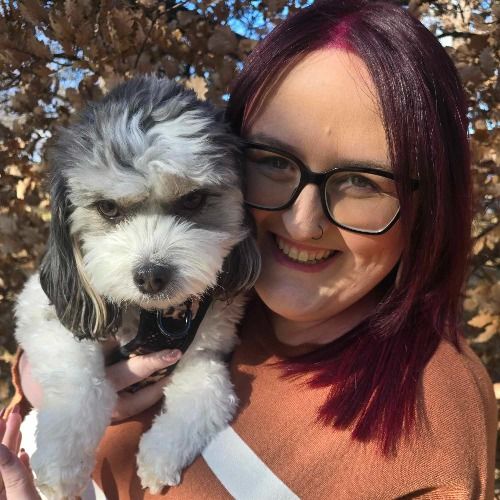
Episode 119
Haram Doodles: On Leaving Islam and Finding Her Voice
Sammy (Haram Doodles) joins Sam to talk about what it meant to grow up in a Muslim household and the long, complicated process of stepping away from a faith that shaped everything — her identity, her relationships, her sense of what was expected of her. She speaks openly about the grief that sits alongside that kind of departure, the familial pressures that don't simply disappear when your beliefs change, and the particular isolation that can come with being somewhere in between who you were raised to be and who you're becoming. It's an honest, tender conversation about religious trauma beyond the contexts that tend to dominate this space, and a reminder that the ex-Muslim experience deserves just as much room in these conversations as any other.
Who Is Sammy?
Sammy is an ExMuslim atheist creating Haram (forbidden) doodles with and for ExMuslims.
Connect
- Find out more about Sammy here - https://haramdoodles.com
- You can also connect on YouTube, & Instagram
- You can find out more about Sam on her website - www.anchoredcounsellingservices.com.au
- To connect with Sam on Instagram - @anchoredcounsellingservices
- Want to contact with Sam about the podcast or therapy? Use this contact form.
- Also check out Religious Trauma & Cults
Transcript
I would like to begin by acknowledging the traditional custodians of the land on which I live and work, the Gundagara land and people. I pay my respects to their elders, past, present and emerging, and extend that respect to all Aboriginal and Torres Strait Islander people.
I also want to acknowledge the traditional custodians of the lands on which you, our listeners, are joining us from today.
I recognize the deep connection that first nations people have to this land, their enduring culture and their commitment to the preservation and care for their country. This land was never ceded and it always was and always will be Aboriginal land. Welcome to beyond the Surface.
This is a space for conversations that sit at the edges of faith, identity, power and recovery, especially for those of us who have been shaped so stretched or harmed by fundamental religion or high control systems. Some episodes are personal, some are reflective, some are educational or curious or quietly disruptive.
All of them are grounded in lived experience and a deep respect for the complexity of leaving, questioning and rebuilding meaning.
We will be talking about religious trauma, various forms of abuse, cult dynamics, queerness and recovery, not in answers, but in honest conversations. In listening to these conversations, some parts might be heavy or activating for you.
Please take care of yourself while listening and feel free to pause or step away if you need to. I'm Sam and I'm really glad that you're here with us. Just a quick heads up before we dive in.
For transparency reasons, this episode includes a short paid message.
At the beginning, I'm conscious to only ever share things that feel aligned with the values of this space, and as always, I appreciate you being a part of it.
Elise:If you've left a high control group or cult and you're wondering why, you're not over it yet, this book will help you understand why.
After the Exit, the long tail of coercive control gives you language for what you're experiencing, validation that your struggle is real, and a framework to make sense of recovery when it feels slow or confusing.
Inside, you'll find the After map, a guide for understanding how control shaped you, why the impact lingers, and what becomes possible as you reclaim yourself. You'll also find permission to move at your own pace because you're not broken, you're not behind, and recovery doesn't follow a timeline.
You can get your copy of after the Exit on Amazon now.
Sam:Welcome Sammy. Thanks for joining me.
Sammy:Thanks for having me.
Sam:I am so excited about this episode and I think people will understand why soon enough. But before we get into it, I like to ask most of my guests, Sometimes I forget but most of my guests. Where in the world are you at the moment?
Sammy:Us. And I've been calling us home for pretty much majority of my life.
Sam:Beautiful. Is it beautiful? Like, is it at the moment, I feel like every time I talk to somebody in the US I'm going, how are you doing? Like, welfare chat.
It's like the therapist in me comes out and goes, how are you actually doing over there?
Sammy:Thank you for that safety check. Oh, goodness.
It's, you know, it's got its up and downs, the ups and downs of politics and the environment, the upheaval of, you know, just all the things happening at once. Yeah. People fighting for rights at once, people, you know, protecting land at once, People fighting for environment at once.
And so, yeah, it's been quite an interesting time.
Sam:And also pretty way of putting all of that.
Sammy:What isn't an interesting time right in human history.
Sam:Oh, goodness. I remember we all said during. During, like the height of COVID like, what a time to be alive.
And I don't think any of us thought that it was ever going to get worse from that point. And then we all just went, oh, fck. No, it does.
Sammy:Yeah.
Sam:Okay. Before we derail the whole conversation with that, I like to start these episodes with a very big, very broad, vague question.
Um, where does your story start?
Sammy:Hmm. Honestly, I'm.
I'm really glad that you asked this question, because when I think about where that story starts, for me, it's really when I experienced that sort of death of my Muslim self and started to really learn about myself and experiencing what it felt like getting to know my true self instead of all these years of policing myself and policing what I was wearing, where I was going, and a lot of that religious ideology of having left Islam. It sort of feels like you let go of this huge part of you. It's almost like you unzip, like, yourself out of a suit and then you.
And maybe you walk away in your birthday suit. But just. But just being able to find yourself. I think that's really where that story starts.
I know all of us, we start as kids and, you know, growing up with the. With the things around us, the people around us and the ideas.
But really, for me, it was an adulthood and finding who I really was after I left Islam.
Sam:Yeah, I think for a lot of people, I love that zipping imagery. I think that's so, like, there's almost like a po. I mean, it's like my. It's also like. It's terrifying, like, but it's also.
It's Such good imagery for people who have potentially never had a. A religious background, who don't necessarily understand what it is like to leave that space. That it is like, it's very much like a shedding.
And I love that image.
Sammy:Yeah. And it's interesting, too, because that shedding doesn't happen in one go.
It's not like just, you know, with the snap of your fingers and suddenly you're a whole new person. It's almost like that shedding is, like, in layers over time. Slowly, sometimes they get ripped off right away.
Sometimes they, like, you know, just shed in little layers. And. And I think that's also the beauty of it.
As hard as that it is to challenge, like, to navigate and as challenging as it becomes to let go of something that was so core to your identity, that made up your identity, and then to let go of that and to find somebody, that somebody else that was there all along and just needed its moment to, you know, shine and to be accepted and to be acknowledged. And I think that's. That's. I feel like so many of us that leave religions behind end up sort of going, shit, this is who I am.
Sam:Yeah.
Sammy:And this is what I like and don't like. Yep, absolutely.
Sam:And I want to get into that, but I think I want to go back in time a little bit because I'm very conscious that.
I think broadly, but I think anybody who has been raised in, like, high control Christianity has a very stereotypical image of what it is like to grow up in Islam. And I think, broadly, people have that as well, not just those in that space. And so was life like for you growing up?
Sammy:So I would say that I grew up in a not so extremist household. I wasn't forced to wear the hijab, of course, women had to wear it when we prayed, when we went to a mosque, when we.
When I had to go to, like, people's houses that were more religious than we were. And so out of respect for them. And. And part of my childhood was spent in.
I grew up in the Gulf, and then I grew up a little bit in Pakistan, and then I moved to the US As a child.
So there's a part of me that felt like I. I was born in the US because it was such brief moments and memories that I had of my early childhood, and it was outside of the U.S. once I came to the U.S. i think it was simultaneously learning sort of these ethnic, religious culture and beliefs and expectations and norms while navigating the American life and going to public School and being around a lot of diversity. And yes, it was an American white majority. And also there were kids that were.
That looked like me, that had brown skin, that had black skin, that had dark hair. And, you know, their names were different, like my name.
And so, like, there was a little bit of, like, okay, yeah, like, there was a sense of belonging there.
And also having that sense of belonging tested over time as well by people who were very overtly racist who, you know, being asked things like whether I worshiped cows or camels by kids or being called a sand n word. And so it just, you know, there's a part of you that erodes away and doesn't feel like it belongs in sort of this.
This new environment, this new foreign world that we were in in America, even though we were the foreigners in the country, and I'm putting foreigners in quotes right now, but as immigrants, as South Asian immigrants, and having our religion tied so closely to our ethnic identity, being Pakistani and Indian, I think it was navigating a lot of different worlds at once as a child. So you're learning something else in school, whereas you're learning something else at home. And so.
But I do remember being a very curious and very happy go, lucky kid. It might be because I was the youngest, and so, you know, there was just.
I was known to be the one that, like, laughed a lot and, you know, and also there's a lot of, like, fear that was deep down inside me, too, especially as I got older, where I love drawing and my parents told me to stop drawing. And it was because drawings are considered haram or forbidden in Islam, especially living beings.
Which is also why a lot of Islamic art has a lot of motifs and flowers and leaves and geometric designs and things like that. And so. But I also know that they were being influenced by more extreme versions of Islam that was making its way into the US as well.
And I think that was really interesting to see the US Community, the US Muslim community around me also changing. And a lot more women starting to cover themselves. A lot more women wearing hijab. And so I saw some of that coming into our house as well.
So, you know, being told that I was. If, you know, when I die, I would have to, like, mimic God's creations, and how dare I recreate what he created through my drawings?
And so as a kid hearing that, you're like, fuck, like, I don't want to get burned by God, and I don't want to go to hell for this. And so just, you know, I tossed all of my Art materials out and like, 10, 12 year old.
And because I was hitting that age of puberty, it was also like, get serious about life. And, you know, God is watching you. You have to be good for God and you have to obey his commands and you have to obey us like parents. Right.
So obeying your parents as like, obeying God. And so it just. And then.
But still holding on to, like, that bit of curiosity that I had, and I could seriously, like, and sort of secretly ask those questions to myself. And I didn't have to because I knew the minute I voiced it out loud, I was gonna get in trouble.
And so that's how, you know, they call us rebels, Right. Because we ask things out loud that weren't meant to be.
Sam:Rebels is a much nicer word than I think many of us have been called.
Sammy:Right, Absolutely.
Sam:Oh, goodness.
Sammy:And so, yeah, I. I mean, like,.
Sam:What was it like for you to ask those questions even, like. Because I think, you know, yes, it's one thing to say them out loud and that's. That's a whole other kettle of fish, I think.
But even there is, like, fear and danger even just in asking them yourself, knowing what you have been taught, the ramifications are of those questions.
Sammy:Yeah. I remember asking hard questions and then following it up with God. I hope you forgive me for asking that. You know, like, and just.
It's almost like you're. You're. And that's the policing, I feel like, that we do to ourselves, right. And that we. We grow up to go.
Like, instead of acknowledging that there is this innate capability for us to imagine and be, we sort of stop that and suppress that curiosity and the imagination.
And I feel like even with my parents telling me not to draw or me even asking my parents, like, why dinosaurs weren't in the Quran as a kid, that seeing their reactions was a very obvious sort of signal for me that, okay, asking anything that was about God or that wasn't relevant for Islam, that wasn't relevant to the religion, that was outside the scope of what was already in the books, was not okay. And so it was a constant, like, sort of questioning, but fear overcame that. And so then that question just kind of dissipated as well.
Sam:Yeah.
Sammy:If that makes sense. Yeah. And I think that was like a continuous sort of journey. You ask and you go, oh, shit, I shouldn't be asking this. And it's okay.
There must be a reason. Yeah, yeah.
Sam:So what was that confusion like?
Because I imagine there was so much confusion as a kid because you can't make sense of what is happening the way that we can do right now in terms of, like, as adults looking back. But you're in what, like, is a Christian nation as a Muslim, and like, what is that dissonance?
Like, as a kid going to what I imagine is a school, teaching the Bible and teaching the ten Commandments and things like that, and then going home and having something different.
Sammy:So luckily my American public school never taught us any Christianity.
Sam:We love that.
Sammy:And so. And so I was really grateful that majority of public schools actually don't teach Christianity.
Up until now, with the government infusing religion into all the things, we're a little more. A little more scarier now. But.
And so I think the biggest sort of difficulty for me growing up in that environment was how do I get acceptance for being different, for looking different, for having a different name, for even having a different accent, really kind of not understanding how to carry myself like that Pakistani Indian self, that Muslim self, and then this other third self that was sort of going, okay, what is this American culture about? Like, what is the music? Like, what is the food? Like? What is, you know, trying.
Even though there's a part of me that knew eating pork was haram, I still in school was curious enough to go get lunch and I bought a hot dog then, this is second grade, and it was delicious. I, like, inhaled it and then came home. And I, like, very happily told my parents about it too, because I was like. It was just so.
It was like this groundbreaking thing for me to try something that was so uniquely American as a hot dog. And then to be yelled at and go like, you can't eat pork. Like, that's haram. And, you know, like, you have to be careful about what you're eating.
And so then continuing to not really, okay, go, like, okay, here. There's these sort of boundaries that are created for you in that moment.
And then I think throughout your life, you're going, okay, what is this boundary? What is this expectation? If I come near it, I know I'm going to get in trouble, not only by my parents, but by, like, God as well.
And so there's this sort of dual layer of authority that you're answering to. Yeah. And seeking permission from and answering to, like, just. And I think that gets really. You don't realize how exhausting that is, but you're.
It's almost that exhaustion that you start to feel and the stress of constantly living up to those expectations. And I think oftentimes those expectations come in like this sort of cookie cutter mold.
Right where, you know, your, your parents are like, here, this is the right way to be a Muslim or a Christian. And you have to fill that space. And so you're trying to squeeze yourself into this cookie cutter even though you don't fit.
Yeah, you are so much more than that cookie cutter can ever hold. And I think once you sort of unmold yourself from it and you like let yourself go.
You know those cookies where you put on the baking sheet, I don't know if you bake, but. And then they like spread all over.
Sam:Yeah, that's what it looks like. It's supposed to look like.
Sammy:Exactly.
Sam:Yeah.
Sammy:And so you look like an amoeba.
Sam:Versus like a person.
Sammy:Yeah.
Sam:I mean, that cookie cutter mold is like, is often something that I will say.
And it's interesting though, because as much as the cookie cutter mold is like constricting and is, is a barrier for you to be able to expand and to grow, is there a part of that mold that also felt safe and contained for you?
Sammy:I think that cookie cutter gives you the, the sort of, the expectations and norms of what you, how you behave, what kinds of attitudes you hold, what kinds of beliefs you have.
And so that sort of environment that gives you community and belonging and norm at this like sort of bigger level, bigger than yourself, it gives you that safety in numbers. Right. Like if you behave like everybody else, you're going to blend in and you won't be that sort of sore thumb that is going to stick out.
And also, I grew up watching the individuality in Americ culture that was so uniquely American too. Because I think a lot of us, when we come from different countries, we find community within ourselves and within our own communities.
And there's a benefit to that because there's a mutual aid network that gets set up that we help each other out. One family supporting another family, one family giving clothes as hand me down so that the other family doesn't have to start all over again.
And so even I experienced that and I think. And there's a lot of safety and comfort and care in that. You know, there's, it's, it's well intentioned.
But where that cookie cutter I think becomes unable to hold us and us unable to fit that cookie cutter and not wanting to fit that cookie cutter is, I think when we start to go, okay, there's much more beyond what I've been told to myself and about the world. Right.
Like you're like, there's much more to me and there's much more to the world than this Sort of this history of the Gulf and like, the Saudi Arabia and like that region that apparently all life and death, everything happens there, all history started there. And so you're told this, like, very biased view of even human history. And so you're coming in, like, almost like you're just in your own tunnel.
Like, you can see other people around you, but you're walking through your own tunnel. And. And that tunnel is guided by your sort of ethnic, right, cultural sort of beliefs and expectations.
But a lot of that also comes from a religion where it's like, okay, you can't. You can't talk to boys. You have to cover yourself.
So even though I didn't have to cover myself, my hijab, you know, I didn't have to wear a hijab, but I still had. I could not wear tank tops or shorts or skirts, so I still had to cover my body, sort of neck downwards to my ankles. And.
And being told that you can't study, you have to live at home, you can't study in another city, you can't study abroad, you can't work in a different city, like live by yourself, you can't travel by yourself. So there's a lot of these rules that we, like girls and women experience in Islam.
And I think we all experience it differently because some of us have more freedom.
And that could be because either our parents are a little more progressive and they're not using religion to control our choices and decisions, or your government is controlling your choices and decisions. Right.
And so I had the privilege of growing up in the US where the government wasn't controlling my decisions and choices, but my family was, my community was.
And that was really tough to navigate because then you're, you know, you're sort of going, okay, then, like, how do I do what I want to do and how do I become the person I want to become? And I think the only way to do it is to rebel. And so I was the black sheep. I was the rebellious one at home.
I was pushing the boundaries that my parents did not expect, let's just put it that way.
Sam:Yeah, I feel like it's more fun to be the black sheep in the family for most. Most of the time. There's a period of time where it's not fun. But by and large, I mean, I think a lot of.
A lot of the stories and a lot of the conversations that gets a lot of air is the. The repression of. Of womanhood and girlhood in Islam.
And so, like, what was it like for you to Grow up in that space like a young girl growing up in that space, not being able to just even be within that sense of womanhood and girlhood. Like, what does that do to your relationship to yourself, to your body? Like, what was that like?
Sammy:Yeah, it's. It's sort of like you fear your own body, you fear your own mind, you fear what others are thinking about your body and mind as well. Right.
So it's like you're worried about what others think of you. So like. And others are policing you as well. And so that's why it's like this sort of vicious cycle that you get stuck in.
And along the way along that vicious cycle, you're also policing yourself. And so it's really interesting to be able to step outside of that, like, thinking outside in versus.
You know, when you're in the religion, when you're in this sort of where everything around you is, you know, everyone's doing the same thing, everyone's speaking the same language, everyone's sort of quoting the same quotes from the Quran or. Right. They're like, you know, Allah, Allah will give you whatever you want. You just have to like, believe really hard in it. Yeah.
But I'm like, okay, but Allah's not stopping me from working in a different city. My parents are. Mm. And my parents are using Allah as an excuse to stop me from working in that city or studying in somewhere else.
So how is it, you know, that, like this, this cognitive dissonance that you have to live with for all those years, you don't even realize it. Right. When you're in, when you're in that. Because you're going, oh, it's just, I'm covering my body because it's for my own safety.
It's so that men, I don't tempt, tempt men because my existence apparently is so dangerous that this is what's gonna like, give another man a hard on. And I'm responsible for that. Yeah. And if that man does anything with that hard on, I'm responsible for that too. Right. And so.
But you don't even realize that you're blaming yourself for that. Right. Cause you're just going, I just need to keep myself safe. And this is how I've been taught to keep myself safe.
So you don't know any other way and so you don't question it. Right. And so until you actually meet people, you learn different ways of caring, of loving, of having freedom.
And I think that's one of the reasons why, like, I feel like I have the privilege Like, I call it a privilege because being in the US I was able to see other ways of living and being and doing and loving. You know, living in a Muslim majority country, you don't see that. You don't see two women or two men holding hands.
You don't see women uncovered women just very nonchalantly running outside in a sports bra and shorts. Like it is such a normal thing. And so growing up with where that's so normal on the outside, but it's dangerous on the inside of my house.
So it's, it's such a duality to grow up in and, and go, then what is safe? What is right for this? You know, and why is it that me, I'm bearing the consequences of being born a woman?
And that's why I often say that I left Islam because I'm a woman, is because these beliefs and these norms and these expectations come back to bite us. You know, they're, they're harming us. And for me, it didn't. There was no connection to Islam until I left Islam, until I went.
There's something really odd here. Like the women experiencing Islam so differently than men is one thing. Right. Like when you're questioning that fairness and unfairness.
But then to continue to see, okay, but this all come kept, it kept coming back to Islam. Right. Like it was like the common denominator.
And I could point, pinpoint things like, you culture is women standing behind men and women not create like shaking hands with men. That's, that's religious culture.
Sam:Yeah.
Sammy:And the religion is teaching you that women's bodies are dangerous and you shouldn't be near. You know what I mean?
And so it's like the, we're continuously experiencing like how that religion influenced the people around us and the ideas that, which with which they were making decisions and their actions and their behaviors. Yeah.
Sam:I think it also complicates it, right? Because like, it's not just, it's not just other humans saying those things anymore.
It's then like spiritually sanctioned because you are not just being taught that like, you know, such and such person thinks that this is a good idea and that this is the right way to live. That person is like speaking on behalf of like God. And so then like, these things have spiritual weight.
And anytime something has spiritual weight, it holds far more meaning in us because there are then far bigger consequences than someone just being pissed off that you wore something that you shouldn't wear.
Sammy:Right, exactly. And the worst thing was to like live with that person who's pissed off and then sit there, go, holy shit, God is going to be pissed off too.
Like when I'm in my graves, when judgment day is here, when we're all like, when God is going to decide who goes to heaven and who goes to hell, like that's when, you know, I have like, I, I used to laugh about it too. I was like, wow, I think I have like probably like a rap sheet of every wrong thing I've done.
And Allah's holding like this clipboard and just like paper after paper.
Sam:Yeah. Unraveling scroll. That is just like endless.
Sammy:Right?
Sam:Goodness.
Sammy:And then God just going like, this is pointless.
Sam:Yeah, yeah, let's just like, let's just cut our losses. I think everybody who has been on this podcast has one of those scrolls.
I mean, like, I mean, we laugh, but what, like what, throughout all of this, like, what was your relationship with God like? Because it's one thing to grow up in that space and to know that you are supposed to have this relationship, but what was it like for you?
Sammy:It was almost like. So I, I didn't grow up with a grandfather. He passed away before I was born. And so it almost felt like that, like this invisible grandfather.
Yeah, this invisible, imaginary sort of. And I'm calling imaginary now at the time, obviously, like for me it was just invisible. But he was always there.
But it was also this sort of strict man, bearded. I imagined him with a beard, long gray hair, wearing like a white, long, I don't know, robe or something.
Barefoot, I don't know, weird visuals that I got as a kid of what I imagined Allah to be like. So I had this sort of. I knew I had to please Allah and I had to obey him.
And I also had to sort of love him and worship him and believe that he was the only one true God. All other gods were false.
And in Islam there is a belief that, that Islam is going to be the only religion when the world ends, that everyone's going to be Muslim. And so you can see sort of how it becomes a self fulfilling prophecy for Muslims as well and the sort of superiority that comes with it.
That like Islam is the last of the Abrahamic religions. So there's an air of superiority about worshiping this one true God. And there's. So that's one layer.
Another layer is of like, you have to constantly please God. And so you're sort of trying to play this like game of Candy Crush, like to earn rewards points.
Sam:Your analogies are like peak. I've not heard anybody refer to it as candy Crush, okay? Please, like, find the candy crush.
Sammy:And so you're constantly wanting to earn rewards, points so that, like, you get enough to get into heaven, you get enough to, like, not have Allah punish you. Right?
And it's for all the reasons that you are taught to, like, this is why you want to believe in God, is that, like, you're going to live a good life and you're going to live a really good life after death too. And I get it. Like, death is a really hard thing to get, get over and to understand that it's as natural as birth.
But when you're taught that, like, there's this, you know, this being that's gonna judge you and punish you, and this is all a test. Up to that point, my relationship with God was really, it was like, as if that there was this imaginary being that was constantly watching me.
And, and sort of my parents were like the, the conduit to him as well. Right, because your parents are like, okay, your parents. The obedience to your parents is sort of similar to your. The obedience to your God.
And, and I think it was a lot of, sort of fear of making mistakes, fear of making choices and decisions that were going to go against God, against Islam, against what he teaches, and really being not confident about yourself, what you like to do, what you don't like to do, what you want to do. Right. And so I think a lot of that time is spent really. It's such a weird, like, it's almost like you're hovering and not really.
You don't have your feet on the ground. Like, you're not grounded and, and you're just sort of floating by and going, okay, you know what? Like this, this life is a test.
I just need to do whatever I can to be in the good graces of God, and hopefully I do enough to get into heaven. So such a linear path that. Yeah, exactly. Fingers crossed.
Sam:Like, fingers crossed.
Sammy:Right? And, and like, you're. And you're.
Meanwhile, you're also like, crossing all your fingers, your toes, you're hoping that, like, you know, that you can do the best you can to, to please Allah, please your parents, fulfill all these expectations around you. And it wasn't until I was an adult that I really started to question those expectations and really push back against that.
Because I was like, no, I. I have my own brain. I have my own wants and needs. I have my own choices.
And around this time is when I was also becoming more of an agnostic Muslim and going, okay, I don't think I want this organized Religion. I want to move away from, like, praying five times a day, reading the Quran once a day, like, doing all these sort of gestures and motions and going.
I just want, like, I have. I want to believe in this loving God. I want to believe in a God that accepts me for who I am and accepts me for regardless of what I've done.
Because I'm just human. I'm. I'm, you know, like. And there's a sense of, like, I'm just this, like, poor little human that's just trying to figure out the world.
I hope God can forgive me. And it comes from this, like, really sort of, you know, place of, like, not wanting violence against yourself. Yeah.
Sam:Because, I mean, hearing you say that, like, in terms of, like, moving into that, like, more beautiful. And I think most people sort of do. They. They don't always go from, like, everything to nothing.
There is, like, that middle sort of, like, messy ground. But, like, as lovely as that sounds on the surface, like, what did that actually feel like?
Because there is so much fear and there is so much of, like, am I allowed to do this? Like, what is the impact if I do? Like, what was that like, Messy middle.
Sammy:Yeah, the messy middle was, you know, trying to date people even though, you know, dating is haram and you have to save yourself for your marriage.
And so fearing that somebody was going to find out that I was dating, fearing somebody was going to find out that, like, I left home wearing pants, but I went outside and changed into shorts, and deep down knowing that, like, Allah was watching me, but at least right now, I could be safe and I could figure out a way to get out of this.
And it was also very simple things like going out with friends and fearing that, like, I'm hanging out with boys and, oh, my God, like, is the world gonna end? That there's a guy standing next to me or that I'm holding a guy's hand or that, you know, like, I'm being intimate with a person. Like, it.
All of those things are so difficult to do when you're. When your brain is going, you're gonna go to hell. You're gonna burn in hell for this.
Even making decisions like, you know, not praying that day or, like, not reading the Quran anymore, even though while in college, I ended up taking a lot of classes on religion. And so I was actually reading a lot of religious text and even wondering, like, if. If Allah was gonna burn me for reading other religious texts.
Sam:Yeah. Yeah.
Sammy:Because those are the non believers. Those are the disbelievers who are going to go. Like, they're automatically going to hell. So am I going to hell by association?
Having gay friends and wondering if they're going to hell? Yeah.
And wondering if my lesbian friend, who is a beautiful person, beautiful heart, and has never given me any reason to hate her, why should I hate her? Just because she happened and still going, shit, Allah's gonna burn her in hell. Right. And so it's. It's such a. It's. It's like being stuck. You're.
It's almost like you're already stuck in hell. Like, this is hell.
Sam:Yes. Yeah.
Sammy:Going what? How much worse could it get?
Sam:Yeah. I mean, the irony is, I think a lot of us are saying that right now anyway, so I think a lot of people can understand that. But absolutely.
That messy middle, I think, is just so. It's so intense. It, like, it's so you are like, I. I often will have.
Like I described, sort of, it feels like you are being ripped apart at the seams. Like you are being pulled in so many different directions that it just feels like you are being ripped apart.
And how are you supposed to make sense of anything when part of you is just being pulled in another direction? And you're right, it feels like fucking hell.
Sammy:Yeah. And what's interesting, too, is that, like, there's other people around you, like your friends. Right. I had Muslim friends who.
They were going through the same things, and they were also going through slightly different things because I had a friend who wore hijab, and there were. There was no way in fucking hell she could ever walk out without the hijab. And if she did, that was. I would probably never see her again. Right.
And so I also kept noticing how so many of those girls around me were also being buried under layers of patriarchal culture and sexism and misogyny and even then making excuses for it, where in Islam it's like, well, you know, it's a really hard thing to do to wear hijab. And so, you know, maybe one day, because that is sort of the true Muslim woman as a.
If you want to be a true Muslim woman, you like, the hijab is sort of one of those steps that you take, and it's sold as that first step. And that sort of the closest thing that you can do to become a Muslim woman is to wear the hijab.
And a lot of Muslim women grow up with the sort of thinking that that is going to be my future state. My mom even never wore the hijab. And now, as an adult, as she's sort of like in that age of being closer to death.
I felt like she started wearing the hijab for that reason. And, and maybe also because it's like, cosmetic. She had.
She doesn't have as much hair as she used to, so there's like this, like, convenience in it too.
Sam:Yeah.
Sammy:And I'm just. But I know there's a part of her that feels it makes her closer to God by doing something that God wants her to do.
And so a lot of Muslim women grow up with that thinking that even if they are not wearing the hijab, but if they want to become closer to God and if they want to practice Islam the right way, that was going to be that first step. Yeah. And I got coerced into it.
I was, I was told by other girls that it made them control their anger, it made them a better Muslim, it made them a better person. And I kept going. But I think I'm a good person. Like, I don't need to wear the hijab to be a good person. My mom's a lovely person.
She might not be lovely when the religion comes up, but in general, she's a lovely person. She took care of me and my, my brother and my sister and, you know, and did everything for us to, like, have a good life. She's not wearing the hijab.
And so, you know, like, I already was questioning some of that stuff, but I think it wasn't until I met my ex Muslim atheist partner, got married to him, and we really started to discuss Islam and I started to learn Islam from his point of view of how it was growing up as a guy, a man to grow up with what sort of the, the Islamic expectations on him. But then also from his point of view of going, why. Why do my mom and my sister have very different expectations than I do?
Just because I'm a man and they're. They're female, they're women. And so he was questioning those things as well. He was going, why?
What's up with the sexism and misogyny around, around Islam?
And especially for him to grow up in Saudi, in Saudi Arabia, where women could not go outside without covering themselves and, and seeing the effects of, of that sort of culture on, on his own family members. Right. And, and being man enough to question that, that was the biggest thing too.
I had not met enough guys, Muslim guys who were openly questioning Islam the way he was. And I. And every time he questioned something, I'd be like, shut up. How are you asking this? Yeah, like, how are you asking that?
This one verse in the Quran is sexist and misogynist. This is insane. I had never heard anyone do that yet.
Sam:Yeah.
Sammy:And so he and I, I think, gave each other that safety to like, very openly question everything and anything. And I knew he was an atheist before even getting married to him. But I also knew that that wasn't going to come in the way of.
Get in the way of how I practice Islam. And we had already decided that, like, you do you. I do me. I married him as an agnostic Muslim.
And like a few years in, by having that safety and care and freedom to ask anything. I think eventually one day I'm sitting on. In the bed like next to him, and I turned to him and I was like, I think I'm done with Islam.
And he was like, okay, that's okay.
Sam:What do you imagine that. What, like, what do you remember that moment being like for you?
Sammy:It was like finally, like, I'm getting goosebumps right now just even saying this. But, like, it, it became that. It got to that point where I was just like, I'm so tired of defending something that never included women's voices.
It never represented women.
It never asked women what they thought and what they didn't, you know, and so repeatedly sort of seeing the erosion and also just our voices and our choices missing from the pages of the Quran from the, from the sort of like the, the hadith, which are the prophets, the Prophet Muhammad's like, sayings and doings. And so we're missing from that. The Quran is talking to men. Like, we're not even the main, main audience for Islam.
And so, like, you start to notice these things and then you just can't unsee them. And finally getting to that point, it was like such a huge relief. And I think that might have been the last suit that I unzipped and walked out of.
Sam:Yeah.
Sammy:Because I think it was probably plenty of suits that I had been wearing up until that point. And really going, you know what?
You finally realizing that, like, Islam is just another religion made by men for men in the patriarchy, like all other religions. And systemic gender bias was inherent to Islam because it was designed by men for men.
And just when you come to that simplicity and then going, oh, shit. So I left Islam because I'm a woman. I could never stand for this. I can't stomach this anymore.
I can't call this religion the way that I want to live my life. And, and seeing everybody else living very normal lives around me too.
And Going, okay, there is another way to live, you know, and there is another way to live and love while being free from religion and being free from the constraints of religion. And he just held my hand, and he just held my hand. He held me. And he was like, it's totally okay.
And I think so many of us don't have that safety and care and freedom to be able to question Islam the way we had each other.
And I remember talking to a therapist friend of mine and telling her that, you know, it almost felt like we gave each other therapy all these years, because I think it really does take that sort of the moment where you can let go of everything that you had been taught to fear. You'd been taught to fear your body, your thoughts, your.
Your questions, your imagination, your curiosity, even your empathy, because your empathy was limited to just your own community. Yeah, right. You had to empathize with Muslims, and that was it. You. If you donated charity, it had to be Muslim charity, if you. You know what I mean?
And so, like, even your empathy starts to grow beyond. Beyond what you've been taught and beyond the community that. That you are a part of.
And I think that is what it feels, finding true belonging as a human. Right. When you're finally stepping outside of that and go, I'm just another human like everybody else.
Sam:Yeah.
Sammy:And so there's a beauty in it. And then there's also. And that's why I call it a death, because it's like there's a loss in it as well.
Sam:Yeah. Like, you said that it felt like a relief. And I will often talk to people about, for me, like, the flip side of the coin of relief is grief.
And so, like, there is. As much as there is so much freedom and relief and expansion, there is also so much grief in this process.
And so, like, what was that like for you in terms of just like, not. Not minimizing it, but actually just being able to hold the grief and not see that as a bad thing and.
Sammy:Also understanding that that grief was gonna live with me and I'm gonna have to grow around that grief. It never really goes away. It's kind of like, you know, I.
My father passed away years ago, and experiencing that grief, and that grief still lives with me, you know, and though I had a sort of a love hate relationship with my dad because on one hand he was Muslim and he was telling me to do the Islamic things that I didn't want to do. So using Islam and sort of this way of like, controlling authoritative sort of approach to raising Children versus this caring and loving approach.
And so being able to hold that grief while still being Muslim, and then now experiencing the death of myself and again, holding that grief and knowing that, like, it was okay, that I. I knew I had to hold that, and I knew that there was going to be more grief that was going to be coming my way.
Because as an ex Muslim, one of the first things, you know is leaving Islam is discouraged, and it's forbidden in Islam, and talking about it is considered blasphemy, and talking about it is considered a sin.
And so immediately knowing that, like, my partner and I were going to be the only two safe people for each other and that there was no way I could, like, walk into a party and be like, hello, everyone, I'm an ex Muslim. Because, you know, the record's gonna scratch. And then, like, everyone's gonna be like, what the fuck did you just.
Sam:I'm just picturing you walking in wearing a T shirt, saying it.
Sammy:I go in wearing this Pride Mobatic T shirt. So, you know, and I think that's the fear that a lot of us ex Muslims have, is, what if someone finds out that we love this mom?
And what if someone finds out that we've been questioning it and that we have these, like, these very heretical infidel thoughts that are considered as if, like, we were traitors to the religion? And that's so scary. And, I mean, I was scared here, living in the US like, we don't even. My partner and I don't even live with our Muslim families.
We have the privilege of living by ourselves, away from them, and yet we were still worried about our safety.
And yet there are so many Muslims living in Islamic countries that have to worry about if anyone finds out, the government can go after them, and they can be killed, they can be imprisoned, and they can, you know, they can be tortured, they can be abused. And there is such a heavy weight around being ex Muslim.
Not many of us have had the privilege of having very open and accepting parents or having an open and accepting government. And so sometimes we're navigating our homes that come with blasphemy and apostasy laws.
And sometimes we're navigating both our homes and our countries. And I think that's the scary thing for all of us is going like, okay, what if someone finds out? What if my life is in danger?
How do I get out of my Muslim home? A lot of us are seeking safety by seeking asylum in a different country. And so I didn't have to deal with Any of that.
Sam:Right.
Sammy:Like, here I was within the safety of my own home, where I get to make my own rules, my own sort of culture and my own norms. And there is something so freeing in that. And then there was something so scary in that too, because it was like, what if someone finds out?
And it was like, you know, you're still policing yourself because you're going, oh, what are people gonna say? Yeah. Cause I didn't wanna lose my family. I don't wanna lose my loved ones. And it's unfortunate that religion can make them hate you. That was still.
Still, to this day, I understand it, and I still am like, wow, the power of religion is so strong.
Sam:Yeah.
Sammy:I had to find a way to fight back against that. Yeah. And I had to find a way to speak because it was just itching away at me. Like it was eating me alive.
I was like, do I write a book about this experience? Do I do standup comedy? And I was like, oh, no, I don't want to. Like, I don't want to lose an eye or something.
I mean, literally seeing Salman Rushdie, like, going through what he did, you know, and being attacked, like, that was also a fear I had. Yeah. And so finally, my husband was like, well, you know, you love drawing as a kid. Like, what if that's something that you explore?
And he didn't even. I don't even think he. Like, neither of us thought of doodles or haram doodles.
But eventually I got to that point where I was jumping into the ex Muslim subreddit. I was learning about other ex Muslims. I learned the word ex Muslim existed. So it just. It was like.
Then it was just, like, going, okay, how do I reclaim my identity? How do I.
How do I build it back up again, knowing now what I am capable of, the potential that I already had, and finally one day going, okay, I'm gonna. I'm gonna put these doodles out there.
le I'm here. And so may March:So we were all sort of hunkered up at home, like, you know, scrolling. Yeah, doom scrolling. Starting sourdough kits and learning how to knit and cook.
ng profusely. And finally, in: Sam:Yeah.
Sammy:And four years later, I have, like 15, 000 followers, and I'm like, I have no idea how this happened, but I think I am hitting a nerve somewhere out there. Nerves are being hit. Yes.
Sam:And I.
And I want to ask about, like, putting it out there, but I want to ask a question before that in terms of, like, what was it like for you to pick that pen up again and give yourself permission to do the thing that you had not been given permission to do before, that had been forbidden?
Sammy:Yeah, it was beyond cathartic. Yeah, it was. It was as if, like this water hose had turned on and there was no turning it off now. And I, like, I have a. One of my notes that just.
I jot down. Whenever there's a random visual idea that pops up, I jot it down and I have a list of, like, hundreds of ideas that I haven't even gotten to.
So this hose is like this never ending source of imagination and curiosity.
I feel like that had been like, sort of, you know, put underground, covered up, and now I'm like, shoveling my way out and going, okay, what else had I thought of that I haven't drawn and visually communicated in a. In a simple way that helps people understand without going into 5 million words of explanations. Right.
A lot of us end up doing a lot of explanation of, like, why and, and justifying and proving.
And I think that was finally when I realized that I didn't have anything to prove, but I had everything to put out there to support people like me and to help build that belonging that I never had and that me and my partner never had in our families and to help people feel like they weren't alone and that those questions and those thoughts that they had weren't haram, that they were just as valid and they were just as human. And. And I think that's why I take a humanist approach to my doodles, is because I want to humanize those thoughts because they're told that we're.
That they're sinful. Right? They're. We're told that, like, they're so untouchable that you cannot access that part of your brain and that apparently that's like Satan.
I don't know if that was similar for you, but it's like, apparently Satan is what puts those thoughts in your brains. And. And so really helping myself and helping others go, this is normal. Yeah, we can celebrate dissent. We don't have to criminalize dissent.
We can celebrate taking back and reclaiming who we actually were and not harm each other for who we wanted to be. And really. And these are just such basic human ideas, right?
Sam:Yeah.
Sammy:Basic human rights.
Sam:Novel id.
Sammy:Exactly.
Sam:I mean, we talked about you not walking into a party wearing a T shirt going, hey, I'm an ex Muslim. Except that you just like did the like equivalent of telling the whole world online. And so like, like, what did that both give you but also what.
Because like that comes with risk, that comes with costs. What was that like for you to just start posting and, and seeing the aftermath of that?
Sammy:I think the one side of it is so beautiful because I get to talk to a lot of people like yourself and ex Muslims who reach out and they're like, you have no idea how, how much your doodles mean to me or that I feel heard and seen and valued and I feel like I belong, you know.
So hearing from ex Muslims felt so validating and I could feel the sort of love and support of the community and yet the community that I left behind. And it wasn't that I left the Muslim community behind, I left the ideology of the Muslim community behind.
And yet I still am part of the community because I'm still, I still have Muslim family and friends that I actually deeply love and I care for. But I know I'm never gonna get that back from them.
And to this day I only tell people that I am very incredibly feel safe way that I am an ex Muslim or I'm an atheist. I can't even get those words out of my mouth because I know it is going to break that relationship immediately.
In a similar way, I've, I've lost a family member who basically told me I was going to go to hell and that I was beyond praying for and has completely disowned me. And I knew that was going to happen. It wasn't a surprise. Yes, it hurt. Yes, it was. It fucking hurts though, right? Yeah, exactly.
It still fucking hurts. Yeah. I fucking knew it. It does. It's such a weird dichotomy to live with. But you have to go. It is what it is. It's not shocking.
And it's also, it is, it is gonna live with me. And that's.
That grief that you end up living with is knowing that you are gonna piss a bunch of people off and you are going to make them really upset. And that's, you know, for me that's not the grief, but it's that grief of losing your own.
The people that you love the most, the people that are closest to you because you. Those are the people that you want to be yourself with, and those are the people you accept for who they are.
And yet there is a condition for them, and there's this sort of red line that they have drawn, and they, you know, you can't go past that. And, and that's the most unfortunate thing.
And the saddest thing I think, out of all of this is that, you know, I'm not even sad about losing as much time as I did to Islam. I'm.
I'm more sad about the experiences of being an ex Muslim and, and being, you know, called a Mossad agent and being called a, you know, you're just, you're just a Christian. You were never really Muslim. You're just a Hindu. You're just Jewish. You, you're. You're a secret Israeli agent that is here to corrupt Islam.
You're, you know, and so very powerful thing. Right, I know. And you're being paid by Israel to, you know, talk about Islam openly like this.
And I was like, yeah, well, I'm still waiting for my paycheck. I, you know, I'm still waiting for Israel to give me money for what I'm doing, but there is no money to be had.
The only thing that we get is a lot of apostrophobia, a lot of hate, and a lot of gaslighting because, you know, they're going, well, you didn't really experience. I didn't experience this. So you're wrong. That's. That's not really what Islam is like.
And one of my main rules of being on Haram Doodles is I don't talk to Muslims because I'm not there for them. My audience, My audience is ex Muslims, and I make it a point to only focus on ex Muslims and the content that would be relevant for them.
And it's beautiful to see that there's other ex religious folks that who see my content. They're like, oh, my gosh, me too. And that's really great, too.
I love that other folks can see themselves in my content and also realizing that there's so many similarities between us.
Sam:Yeah. Different doctrine, different religion, different beliefs, but the themes of, like, fear, control and guilt and shame and like.
Yeah, all of those things. Oh, similar.
Sammy:Yeah, yeah, yeah.
The way I've actually made a doodle about this where it's called, like, I call it the Lake of Apostasy, where it's like, we're all on the same body of water, but we might be on our different ships, right? So there's like a, a ship with ex Christians, some ex Muslims, and. But we're all on that same lake together.
We're all sharing that same sort of ideology and mindset that, that really ends up harming the most basic human instincts, the most basic human characteristics. And it ends up taking away that potential that we inherently have. And I get it.
A lot of us experience hardships like poverty or losing a job or having a health challenge, but also realizing that religion wasn't going to get me out of poverty. I needed, you know what I mean, our systems needed to do better by us and we needed to do better by our systems.
And really, I think understanding how religion plays a role systemically and understanding our individual role in that and how it affects people, I think that was super helpful in helping me understand how I can make these doodles that would help people understand that too.
Even sitting through like diversity, equity and inclusion trainings and sitting there going, okay, I'm learning about white supremacy and white supremacy characteristics, but my brain could not help but to think about Islamic supremacy and Islamic supremacy characteristics.
And so even using and understanding systems from a different point of view helped me, also gave me a whole new perspective about Islam that I hadn't really seen before. As well.
And so thinking about it from a systemic lens of like, okay, gender biases is systemic because when you have everything from beliefs to, you know, what's written in the Quran to how it's being practiced in real life, all of that contributes to creating a system where women are considered discount humans or not considered actual humans.
And I think it's been really beautiful to see a lot more women reaching out to me and, and seeing them, I think, and that's something that I was missing too, was like content that really spoke to through that feminist lens and also speaking through it from a very humanist lens. And I, when people see that, it tells me that, okay, it makes me feel validated that like, I am thinking about these things.
And I know there are others that are thinking about it too.
And it's just, it's that feeling of never of, of so much loneliness and isolation while you're going through this turmoil of like, who am I, Am I even this, like, religious person anymore, letting go of that religion and then finally getting to this point of, you know what? I'm going to support this community and I'm going to try to give back to this community that I would have wanted for Myself, that's been.
I think it is. It costs me my time, but it's time so well spent, and it's time so worth it.
Sam:So much of your art is actually, like, genuinely funny also. And so, like, I'm like, I'm curious. I love using humor. I'm like. I think a good chunk of my soul is just pure sarcasm.
And so, like, I love people being able to do genuinely funny things with really fucking painful things and really, like, horrific, harmful things. But, like, what is it like? And why is it important for you to be able to say things with humor that isn't.
That's actually still saying the sincere thing, but without it having to be heavy and intense and. Because I imagine that's both helpful for the people that it's landing with, but I imagine it's helpful for you too.
Sammy:Absolutely. Especially, I think humor becomes a really great way of lessening that fear.
Sam:Yeah.
Sammy:And lessening that. The seriousness around religion and how. How much priority it takes in our lives.
But then once you start to deconstruct it, you also start to look at, like, sort of the absurdities because, again, we're talking about, like, 7th century when human rights didn't exist, when. When LGBTQ rights, women's rights, science as we know it right now didn't exist. Right. Yes.
Scientific thinking was beginning, and there were things that were being discussed. Right. But at the same time, when you read something that says the universe was created in six days, you're like, okay, of course that's bullshit.
They didn't know enough that back then. Or when the Quran completely omits the woman's body or her uterus or her eggs from the whole creation story. Then you go, of course a man wrote this.
Of course he's going to talk about his own semen and sperm and, like, everything that benefits him. And so it's, you know, that's. I think, using humor to sort of jab back at these absurd ideas.
Like, a recent doodle that I posted was, you know, there's a story of ants in Islam where Prophet Solomon was so powerful and he had these gifts of, like, being able to, like, command armies of birds and animals and. And like, these jinns, which are another type of being in Islam that are considered like, they kind of live in their own parallel universe with us.
Very fascinating. If you ever want to look into it, there's a whole chapter on the. In the Quran about jinns as well, explaining what they are.
And so apparently this prophet, back in the day, even before Muhammad, commanded these armies and he came upon a group of ants, and the ants said to each other, like, hey, Solomon and his armies are coming. Like, go home. Go back to your home. You know, so he doesn't, like, crush you.
And so I did this doodle with ants because as a kid, I'm imagining these ants, like, speaking Arabic, right. You're going, are these. Is it that Solomon can understand the language of ants, or is it that ants are speaking human language? And so you.
You think about it, but you don't. How do you put it visually out in front of somebody to also help them go, oh, shit. I thought about this too.
Sam:Yeah.
Sammy:And so, like. But then putting it from the ant's perspective is what, you know, I was like, I don't want to draw Solomon.
I don't want to draw prophets, but I want to draw the ant that was. That's quoted in the Quran. Yeah.
Sam:Goodness. Yeah.
Sammy:And just. I think that was. And also, like, I. I think that's also how my partner and I deconstructed the faith.
Was like, talking about the heavy things, but then also make. Making fun of stupid things. Like, every time you farted, you had to go wash yourself again so you could pray. You could never pray after you farted.
Yeah, women can't pray if they menstruate. And so, of course, like, could, you know, lie about my menstruation and get away with fasting.
Sam:And so I'm just imagining, like, the women who have, like, endo or pcos who can, like, bleed for like, six months sometimes. I'm just like, yeah.
Sammy:And so a lot of us, you know, me included, I was going like, Ramadan came along and I was like, oops, sorry, my period's a little longer, like in this.
But then being able to, like, actually draw that and have other people see that same sort of thought process and how validating it is for other women to go, yep, I did that too. Or, yup, I farted after praying. And I totally didn't go wash up. I just kept praying.
And so, like, just hearing from people and being able to relate to these very mundane sort of things that we grow up with in the Muslim culture and community. And so.
And I think it also gave me a chance to go back to that happy go, lucky kid that I was and that I always was, and how much I loved to laugh, and I loved making other people laugh as well. Yeah.
Sam:What would you say to that little kid now?
Sammy:I would tell her that there's nothing to be afraid of, and especially not herself. And I think if More of us heard that as kids, and if more of us were taught that and taught not to let go of our.
Of just that human capacity to love ourselves, to accept us, to accept who we are and to accept us in our own bodies and to love our own bodies and not to be ashamed of that, you know, like, it. It's such a huge weight lifted off your soul, off. Off your shoulders, but then it's also this.
It's not like, sort of more weight comes on you, but it's all. It's the sort of, like, new discovery of who you are, and it can feel overwhelming because you're like, oh, my gosh, I want to do all the things.
Yeah. I want to eat all the bacon. I want to draw the things I want to do. Everything that's haram. And many of us go through that.
We go through this, like, really, like, massive upheaval and. And also reminding myself that, like, I. I can take it one day at a time, and I can take it one doodle at a time, and that there's plenty of. Of.
Of experiences and of circumstances and of identities around us. That. That gives me a lot more content to draw.
But then it also gives me a lot of hope because I know that there are really good people out there that are fighting the same fight. Yeah.
Sam:Are there still moments where you do something that you were not allowed to do, that was forbidden, and you go, oh, fuck. Like, are there, like. Cause I. Like, I think there's still moments where I will go, oh, my gosh. Like, is that just, like, spirit?
Like, is this shit thing that's happening in my life, is that because I no longer believe X, Y, and Z? Like, is that just the spiritual punishment? Do you ever have those moments where you're like, oh, fuck, I'm not allowed to.
I'm not supposed to do that.
Sammy:Used to. I don't think I have that anymore. I think now it's much more, like, real.
Like, the real consequences of behaviors and actions, and it takes a while to get there. We're not. We're messy. Humans are messy as fuck.
Sam:Yeah.
Sammy:The things we say, the things we blurt out, the actions we do, you know, like, it's not perfect. And I think it's like, it's understanding that there was a time where I definitely there where I was like, oh, my God, if I.
If I talk about Allah like this, am I offending somebody? Or if. Am I offending others? Am I being a horrible per. Am I being a hateful person for. For doing this? Yeah.
But then I have to remind myself that I'm actually, I am one of the victims and one of the survivors of, of leaving a cult like religion. And, and that it's okay to still be tr. You know, I mean like you still, you're still triggered by certain things around you.
Like a text message that you get from a family member that's very religious or your mom telling you to go pray because you don't pray anymore. And it's like that's the last thing you want to hear. So I think it's more of that, that we're, we're.
It's more of the triggers that are now I'm experiencing versus feeling like shit if something's gonna happen to me.
There was definitely a period of time where I went through in my life where I was like, if I think like this is something that is, is that next bad thing that's gonna happen because a result of what I'm saying or the decision I'm making, the choice I'm making, but I'm.
If it wasn't for having this person I'm living with and to be able to talk very openly and out and sort of voice that fear out loud, I think I probably wouldn't be here and be so comfortable with that now.
And that least of my concerns are like, oh, okay, I'm gonna get triggered by a Muslim, like really not that big of a deal when too many of us have to suffer the consequences and the real like life threatening consequences of leaving the faith.
Sam:Yeah, I think there is this and I think this is broadly assumed for anybody leaving religion, which is that you are taught whilst you're in there as well, that if you leave life is going to be shit, it's going to be miserable. You are going, nothing good is ever going to come because everything good that comes is from God.
And so if you don't have God, then nothing good is going to happen.
Sammy:Yeah.
Sam:And so what does like your beautiful love free life, what does that feel like for you now to be able to experience all of those things that you would have been told you wouldn't get if you left Islam?
Sammy:Yeah. You know what's interesting is I think the one thing that I feel like I have that I never had before was time. Yeah. So I.
And time and space, where it's like I have more time to devote to the things that I probably would have done years ago and I have more brain space to devote to learning about things in our world that I never could before because Islam took up so Much of that brain space, even to this day, I do not want to memorize which chapter, the Quran, which verse it is, because I'm like, I don't. I can look it up. It takes me two seconds to look it up online thanks to technology. And what a. What a time to be alive, right?
That we are born and living in this time and age where we have technology that helps us meet each other.
We have the time to spend on helping support each other and, you know, and being there for each other in such a whole new way where we're globally connecting. And I think. I think I really sort of cherish those moments of time and space a lot more now than I did before.
Because I think before as a Muslim, my brain was so focused on playing Candy Crush and getting into heaven that it doesn't allow you to think about anything else. Like, you sort of actively shut out everything else around you and the whole entire world around you. And now experiencing awe and wonder.
When I look up at the stars or when I'm, I don't know, sitting at the beach and just watching the vastness of the ocean. Like, there's just. There's so many more ways of experiencing that awe and wonder that I think I thought was spirituality and I needed it.
From religion, where I can't even get myself to call it spirituality now, I. I call it awe and wonder because I think that's. That's what really sort of helped me go.
I don't need to have this other soul or this other entity inside me to make me feel like me and that everything was already here. And all I needed to do was actually open my eyes and look around me and to observe and to absorb and to experience.
Whether that's taking a hike in, you know, in a forest or that's walking through a desert or even driving to the grocery store to get groceries. Right. As simple, simple things. But I no longer had to live that life controlled by an entity that didn't exist. This imaginary sky.
Baba was not watching me. And this entire system that never actually served me, I could let go of and never have to worry about ever again. Yeah.
And the only thing I could worry about now was what am I going to draw next?
Sam:Yeah.
Sammy:And how else can I support the ex Muslim community?
Sam:And speaking of the ex Muslim community, I like to finish these episodes with some encouragement. And so, like, what would you say to someone who is fresh in that space?
They've not been out for long, potentially, that they're in that messy middle, even. Potentially.
Sammy:Yeah.
It takes A lot to come out of a religion like Islam and to look at it from the outside in where you've looked at it from the inside out all this time.
And so we come out sort of like these, like we're like the canaries in a coal mine or like the whistleblowers at like a company and we want to like, there's a lot of pent up anger and grief that comes with it, you know, and also like the, the stress and anxiety, the loss, the depression. There's so many sort of these heavy, heavy emotions that we go through and experience because of it. Keep going.
Don't let those emotions hold you down or hold you back from really learning about yourself and learning about the world that we've been given one chance to live, seek, seek community, seek support online.
hink being the fact that it's:If you're navigating really tough decisions like do I tell my family I'm an ex Muslim or that I've left Islam or I'm an atheist, whatever you do, prioritize your safety first because at the end of the day you have to navigate all of that and, and as risky as it is and maybe as unburdening as it is, right? Like yes, it's gonna give you a great feeling, but if it's going to put your, you know, your life in danger, maybe think again.
Put a plan B in action or a plan C, like have multiple plans because you never know what's going to happen. Not every parent is going to be okay with, with their children becoming atheists or agnostics or converting.
And you really have to decide that for yourself. But keep going, keep asking questions, keep finding safety and comfort for yourself, whether that's online or in person.
And if you're an ex Muslim out there, I just helped launch a website called ExMuslim Me where you can share your story. So I invite all ex Muslims to, to share their story and you never know. Right? Like your story matters.
You're not alone and it could potentially help somebody else on their journey as well.
And I invite all non Muslims and Muslims to read the stories and get a better, better understanding of who ex Muslims actually and who they really are. Absolutely.
Sam:Thank you so much for joining me.
Sammy:Thank you for having me.
Sam:It's been an absolute pleasure to have this conversation and I hope that people, you know, I talk all the time about survivor stories being the best education that we have.
And so I hope that people will do exactly what you just said and go and read those stories and outside of the image or the idea or the assumption that they have and actually listen and hear and read people's stories of what their experience is. So thank you so much for being here, for doing that work.
Sammy:Yeah, thank you. And thank you for all that you do, too. I mean, I know it's not an easy job to be a therapist and we need way more, like maybe just clone yourself.
Sam:We do, we do. We're giving it a red hot crap to try and get more.
Sammy:Thank you for being a healer in this world. Thank you.
Sam:Thanks for listening to beyond the Surface. If this episode resonated, challenged you, or named something you've struggled to put words to, I'm really glad you found your way here.
You'll find ways to connect, learn more, and explore further in the show. Notes. As always, you are good. You have always been good and your story matters always.