Episode 111
DID, High-Control Systems, and Plural Identity
Psychologist Joh Knyn joins Sam for a thoughtful and nuanced conversation about dissociative identity disorder. A topic that is so often misunderstood, sensationalised, or flattened into something it isn't. Together they explore the intersection of DID and high-control environments, unpacking how trauma shapes plural identity and what genuine, affirming support actually looks like in a therapeutic context. Joh brings both clinical expertise and a deep commitment to meeting people where they are, and the conversation makes a compelling case for why the mental health field needs to rethink how it approaches and affirms plural identities rather than pathologising them. For listeners who live with DID, love someone who does, or work in a helping profession, this episode offers something rare; a conversation that takes plural experience seriously and holds it with the care it deserves.
Who Is Joh?
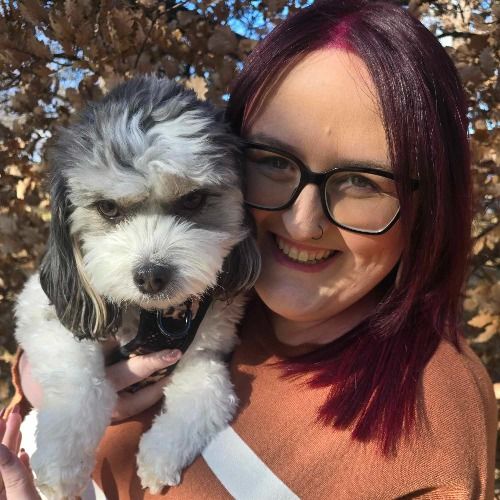
Johanna Knyn is a psychologist based in Australia who works mostly with complex trauma and dissociative identities. Her work focuses on helping both clients and clinicians make sense of experiences that are often misunderstood — including dissociation, plurality, and the impact of high-control or religious environments.
She is the author of Dialectical Behaviour Therapy for DID: The Workbook, one of the first published workbooks to adapt DBT specifically for people with DID. She spends much of her time providing supervision, training, and education for other practitioners. Johanna is particularly passionate about system-affirming, trauma-informed care that meets people where they are.
Connect With Us
- Find out more about Joh here - https://www.johannaknyn.com.au/
- Connect with Joh via IG - https://www.instagram.com/psychologist_joh/
- If you're a clinician connect into this Facebook group
- You can find out more about Sam on her website - www.anchoredcounsellingservices.com.au
- To connect with Sam on Instagram - @anchoredcounsellingservices
- Want to contact with Sam about the podcast or therapy? Use this contact form.
- Also check out The Religious Trauma Collective
Transcript
I would like to begin by acknowledging the traditional custodians of the land on which I live and work, the Gundagara land and people. I pay my respects to their elders, past, present and emerging, and extend that respect to all Aboriginal and Torres Strait Islander people.
I also want to acknowledge the traditional custodians of the lands on which you, our listeners, are joining us from today.
I recognize the deep connection that first nations people have to this land, their enduring culture and their commitment to the preservation and care for their country. This land was never ceded and it always was and always will be Aboriginal land. Welcome to beyond the Surface.
This is a space for conversations that sit at the edges of faith, identity, power and recovery, especially for those of us who have been shaped so stretched or harmed by fundamental religion or high control systems. Some episodes are personal, some are reflective, some are educational or curious or quietly disruptive.
All of them are grounded in lived experience and a deep respect for the complexity of leaving, questioning and rebuilding meaning.
We will be talking about religious trauma, various forms of abuse, cult dynamics, queerness and recovery, not in answers, but in honest conversations. In listening to these conversations, some parts might be heavy or activating for you.
Please take care of yourself while listening and feel free to pause or step away if you need to. I'm Sam and I'm really glad that you're here with us.
Sam:Welcome Jo, thanks for joining me.
Joh:Hello. I'm very excited for today.
Sam:I am excited for this episode as well and I love, I love when I get to deviate from my typical story based episodes, which I love. But I love when I get to like get into like the nitty gritty stuff as well.
And I also love episodes where I am almost certain that I'm going to learn something in this conversation as well and that is always very nice for me. So just to sort of like set the scene a little bit, we'll get into what the episode is about.
But for people who maybe don't know you from your face or your name, who are you and where are you coming from today?
Joh:So I'm Johanna Canine Joe. I'm coming from Brisbane or from Yuggeraland.
I'm a psychologist and I work clinically mostly with clients with DID and who have survived high control environments.
Sam:And spoiler, that is what the episode is about today. I did not get you on to talk about something completely opposite to that. So potentially like this is going to be an episode.
I think not only that I learn a lot in, but I think a lot of, a lot of other people will Learn a lot in. And we are going to try and make it as helpful and as interesting for survivor and practitioner alike.
And so before we get into any of the finer details of this episode, let's do some, like, definition grounding, because I'm sure there are people who are listening to this going, I have no idea what the fuck DID is. So what is this episode even about? And so can you walk us through some of those definitions in terms of dissociative identity disorder?
Why potentially, that's the last time either of us will use the word disorder in this episode and potentially the other terms that they might hear instead.
Joh:Yeah, so did, if we think of just, you know, medical pathology is what we would use if we're making a diagnoses of some kind. If we're using our DSM or ICD 11, it used to be called multiple personality disorder back in the day. I think that was like 30 years ago. It changed.
But we now know it is not a personality disorder. So DID refers to that kind of medical framework.
If we're talking more about just the experience of self that isn't necessarily inherently disordered, we might use the word plural or multiple to still kind of describe the experience of dissociative identities. That then is a little, a bit more distance from DID per se. So I tend to use plural and more affirming language.
Sam:Okay, now, before we get into what all of those mean and what they are, I want to give you an opportunity to say this episode might be quite activating for some people and just sort of like, how can we borrow. Be cautious about this one.
Joh:Yes. So caution in terms of this can just be really heavy, like emotionally. So the great thing about podcasts, you can pause at any time, come back to it.
But more specifically for survivors who are plural and who might have experienced different childhood experiences than maybe this standard, it can be very activating for your system. So. So I'd say again, go really slowly in listening.
If it doesn't feel right, if we hear someone inside maybe saying, we can't be listening to this, just pause. You can come back at any time to listen to it.
Or maybe it's something that you can't listen to right now and something to save and listen to in the future. But if you're hearing this doesn't feel right, please listen to your headmates. Pause. Beautiful.
Sam:Now, for people who, yes, we've got different terminology, but there is potentially people who still don't know what those things mean. So when we talk dissociative identity, what actually Is that.
Joh:Yeah. So it essentially is just a different experience of self. So if I differentiate it from singlets.
So as a child, we develop personhood and over time, it kind of all smudges together or coalesces together to create a single unified self. I'm me. There's different aspects of me.
There's maybe different ways in which I might present any context and that being within the realm of what normal, acceptable, socially differences of self. When we talk about dissociative identities, we're talking about multiple identities within one headspace or mind.
So for me, I separate brain and mind. Brain being our organ, mind being where we exist as peoples.
So as a person with dissociative identities, there'll be multiple selves inside, whether it is fully did.
If we're going medical, where it is very separate, distinct individuals inside to maybe partial did, where it is maybe the same main fronting identity versus shifting between different identities that take over executive control. So someone else decides what is said, how the body moves and how they perceive the world. Or even a little less distinct would be osdd.
So the soupiness of self that isn't singular self.
So if we think of sometimes, if folks have never really thought about this in any way and just don't know how to conceptualize it, and that makes sense, say, to some clinicians, imagine if you've never broken a bone and what the pain feels like and the experience of, like, your internal, like, matter cracking. It's really hard to connect with that experience. You can cognitively, but it's hard to know what it feels like.
So sometimes it is really hard to conceptualize what it would be like to have multiple selves when we've only got one internal self. So the movie Being John Malkovich, it's an oldie but a goodie.
That can sometimes be helpful in understanding what it might be like experiencing multiplicity even though it's not inherently coded that way. Or the newer show, like Severance, where they leave and then they become a different form of self again. It's not.
Not explicitly did, but there are some bits of media out there that aren't DID is violent. That can sometimes help wrap your head around what it might be like to be multiple. If it's just like, I can't bridge that gap.
Sam:Yeah, yeah. Okay.
Now I'm going to throw a question at you that I didn't prepare because as you're talking, I'm thinking there are going to be people who are hearing terminology and they're going to be like, oh, is that this, and I think I want to clear some potential confusion because there's language that's being used as well. What aspect of this is and isn't language around dissociation as we know it to be like a trauma response.
And also what people know as parts work and how that is like all of those sort of like things that are not necessarily the same thing, obviously, but they're similar language. And I think there can be some confusion there.
Joh:Yeah.
So parts work, at least in how I approach it, is more the framework in understanding that all people have parts of self, say, with internal family systems.
That doesn't necessarily mean that the parts are distinct from each other and experience themselves as individuals and thus experience the world as individuals. So if we think of parts work, I might be looking at a client. And they have different parts of self. Because we're complex human beings.
There's the conscious mind, unconscious or subconscious. There's going to be different aspects of self.
But there is a cohesion between the part of me that might be at work and then the part of me that might be at home. There's no separation of individual. They're not individuated parts of self. When we think of plurality, they are individuated.
So if I can then imagine I've got identical twins in front of me, like genetically identical. I might be seeing the same person because I can't tell because they're identical. But the way they've experienced the world is vastly different.
Because experience perspective that then shapes how they view themselves, how they view the world, how they interact with the world, Imagine that inside. So my parts might be coalesced.
And so there is a continuation of experience and understanding of the world and how I am in the world with my different parts. If we think of parts in terms of identities, they will be very different.
So if we were both in the same mind and you weren't experiencing the world for four years because you weren't influenced by the last four years, your perspective of self and how the world works the last four years would be irrelevant for you because you've not been part of it. And so that's where the individuation starts to become, at least for me, quite obvious.
In the same way any other person out here, like, well, I haven't lived your life, of course I'm not going to think the way you do feel, the way you do understand the world, the way you do the same goes inside. All identities internally will experience the same world and have the same feelings and thoughts because they don't experience things all the time.
So when we say parts, it can be confusing where it's like, are we talking about parts as like everyone is parts or parts as in dissociative identities. So for me, I tend to stick with headmates because then that differentiates parts as like everyone has it versus headmates.
Not everybody has headmates.
Sam:Yeah, yeah, I love that distinction. And also it's just really cool language. It's just like a really casual, like non clinical language that I just imagine like as you know.
Yeah, yeah, I love that. So like, as you're talking, I'm going like, how do people typically experience or relate to their own plural identity? What does that look like?
Because like, I know, but like it varies from individuals and systems and things like that. So what does that look like for people who are experiencing it themselves?
Joh:Different every time. So it's a unique microcosm of their world.
In the same way you could have a family out here that is two parents and three siblings and have multiple families that look that way. The relationships, the dynamic are very different.
So each internal system, sometimes we'll call them our inside families, the dynamics are very different. And so how they interact with each other, view each other, their awareness of each other is going to be different in every possible system.
In the same way, if we say, if you've met someone who's autistic, you've met one autistic person. If you've met someone who's a system or part of a system, you've met one system.
Sam:Yeah, okay. Where? And, and I am always like cautious asking this question because I've heard some people answer it poorly.
Joh:Gosh, no, no.
Sam:Like depending on, I guess like the framework and the perception that people who work with this population are coming from. Where does this come from is I think what people are thinking? Like, is this trauma? Is this something you're born with? Is this genetic?
Like, what is this functioning as on like a neurobiolog level? What is actually happening?
Joh:So as a psychologist, I would love to know more about the like neurophysiology side of things. So I'm not an expert there, so I'll answer in how I understand it.
Everyone dissociates normal human experience, so there's nothing diverse about that. When it comes to experience self as a plural, there is divergence. Did falls under the neurodivergent umbrella.
What happens though, as children, and this will be one of those. If we need to pause, please pause. Come back to listening to this later when our identity is still Kind of soupy. Terrible things happen.
And there is no safety or recovery after those terrible things. And these are not just, someone's kicked me in the shin, and that's terrible, and I might have broken a bone.
These are really horrific, intolerable experiences that no human being can survive, really. In those experiences, the body survives because the person has lived. But in order to survive, the mind has to separate from itself.
So that part of consciousness holds onto what occurred, and then there's a part of consciousness that doesn't have to hold onto it. And so that part of consciousness survives. There's a sense of maybe innocence from the intolerable.
So I'll use the kick in the shin is our intolerable. I'm kicked in the shin. There's no safety route I can't tolerate because no human being can.
In this instance, being kicked in the shin by a caregiver, it's just horrific. In order to get through, there is a dissociative and amnesia barrier that comes up.
So that one part of consciousness, or 5 or 10, the number of headmates, does not correlate to the number of traumatic experiences. So let's say three. Three parts of consciousness split from each other in order to carry the weight of being kicked in the shin by, say, dad.
Then there's another part of consciousness or two or four that don't hold onto that and likely don't know it occurred or might know it occurred on an information level, but really have no embodiment of that's what it's experienced on this side. It could be three. One part holds onto the emotional aspect, and that's it.
One part might hold on to almost every other sensory experience but the pain. And so they know what happened, but they don't feel it emotionally. And they might not feel the pain of it.
And then one part might just hold on to the pain, but have no idea where that pain came from because they don't hold on to that information. So if we think of, you know, of my fidgets, there's multiple sensory. There's multiple parts of information for any single experience.
That doesn't mean one part holds onto all of it. It might be intolerable to hold onto all of it. And so the need is to separate it even further.
And that can sometimes get confusing for, say, clinicians when it is, why am I talking to a part who just is in pain all the time? And it looks like chronic pain, but it's actually somatic flashback.
But because that part doesn't understand where the pains come from because they can't know it's intolerable. It just is. In chronic pain, man, you have must.
Sam:Have some really, like, killer supervision sessions because I know you're a supervisor as well, trying to, like, work with, you know, clinicians who are working with populations that like, present is presenting as like something like chronic pain, but is not that. And just like, you know, supporting other practitioners to, to be able to do that is like, is incredible and must be just like, really cool for you.
There is a reason that we are having this conversation on a podcast around religious trauma and cultic abuse.
And so I would love you to speak to, I guess what those particular conditions of, you know, cultic and high control environments and why those settings make dissociative identity more likely to emerge or potentially remain undetected as well.
Joh:Yeah, so I mean, in the general sense of things, typically find dissociative identities as viewed as rare anyway, regardless of what the person in front of you is, you know, describing. When you Google it, rare, you know, doesn't come into psychiatric populations. But if we think of like, disease, rare is 0.05%.
That's 1 in 2,000 people who have a condition. The idea is 1%, and that's from our current DSM.
That's very different. One in: in:Not to say people with red hair have did, but in terms of comparing, if I'm seeing, you know, walking around the world, I'm like, oh, that's beautiful. Red hair.
Sam:Good, good, good.
Joh:Just to like, clarify, but did you can't see red hair. You can. So I wonder if you walk around. Yeah.
If I'm seeing a bunch of redheaded people, I might also be seeing a bunch of people with did, and I just don't know. And that's in the world.
So if we think in the, you know, therapeutic space and we're working with people who have experienced, you know, high control environments and grown up in high control environments, either their first Generation second or third. Most of my clients are second or third generation. Experience of traumatic events just is far more than standard life did. We're going medical.
Even though it doesn't say in the DSM that trauma is required for a diagnosis, what we understand currently is that it is from trauma how to adapt and survive horrific trauma. So if we're in environments where there is just a lot more trauma happening, then there's more risk of DID forming.
That doesn't mean every person who experiences these environments will have did, but they might dissociate more than the average person because again, dissociation is a human experience. When we think about high control environments or maybe organized groups such as like say secret societies where part of their.
Yeah, to hurt, you know, children or train children to be a certain way. There are different types of did that it isn't in the DSM or anything.
There's no subtypes currently possible future PhD for me in understanding that we can have organic organic DID and then say non organic DID or intentional organic being shitty things happen by shitty people and as a result my mind adapts to survive. Or shitty people know how to do specific horrific things in order to systematically induce dissociative identities.
Yeah, so this would be maybe one of those points of pause. Listen our headmates, if this is too much pause, the podcast one is a. A natural occurrence. There's nothing wrong with it.
Yes, that being traumatized there, that is the thing we want to heal from being plural just as a different way of being, you know, experiencing humanity. But when we get to systematically induced dissociative identities, that's a different kettle of fish to a degree in how we work with folks.
And that can be more prevalent in these types of groups. Yeah.
Sam:And I think, you know, in terms of that systematic approach, like I know that you work with a lot of like survivors of ritualistic abuse and torture survivors and that intersection of harm is like very specific.
And so I would love you to talk about that intersection, but also to name why it is so important to keep that and to name that explicitly rather than keeping it vague as well.
Joh:Excellent question. So there's say our Ramcoa so R A MCO A so Rachel Abuse, MC Mind control, OA organized abuse. Our Ramcoa survivors with dissociative identities.
It is really important that we understand that they exist, that these are real experiences. This isn't the othering of it happens over there. It happens in the U.S. you know, with what's happening over there.
It happens in a different state These experiences can happen anywhere. In suburbs, in the next door, our next door neighbors. It isn't something that necessarily happens only in rural areas or very quiet areas.
But knowing that there is a difference between say our organic and our systematically induced is important in how we approach things therapeutically and how folks who are survivors approach themselves.
If we're only approaching dissociative identities under the assumption that it is organic, then we might end up causing harm because we're not understanding an element of how they came to be being not organic. There were specific things done in order to create specific outcomes, actual headmates.
So doing certain things to create a specific headmate for a specific task, that is something that they have no control over. So essentially that kind of. What is it? The. The Bell salivate condition. Yeah. Pavlov's dog. Yeah. So it is.
It just occurs because it is programmed into them. So even though RAMCOA doesn't necessarily specify programming, this is what I mean. Mind control and programming are slightly different things.
So programming being what we might see in the movies and the othering of like sure, but that happens over there of, you know, if I knock three times, immediately someone else shifts forward and they do their role whatever they're trained to do. So if we're working in the space as therapists, either way curious. We think this is something that we're passionate about. Fab.
We need people to work in the space or we do work in the space and this is something new we're hearing about REMCO Systems.
I think it's either Ellen Lakhta or Alison Miller, both fabulous in you know, where to learn a bit more about this is if you're working with DID clients. And I say that because, you know, we're working in the Medeco space instead of more affirming.
But if we're working with folks who would meet criteria for DID or OSDD or Partial Dissociative Identity Disorder, we should just assume this is a RAM COA system and work from that framework until we have information that says otherwise as opposed to assume it's organic. And then it comes out that maybe they're not.
Because in the way we approach an organic system might be pacing is just too fast for systematically induced system, much too fast. And then just constant decompensation destabilization. It's like, why is this happening? Well, maybe there's more to it than we've approached.
Or the strategies that we approach treatment with either reinforce programming which then whilst we aren't abusers ourselves, inadvertently we take on that role because we're reinforcing programming and not really sure. So if we're working in the space, please just assume you're working with a RAMCO A system and learn about what that means and reflect.
Maybe there is not treatment resistance. Maybe I'm working from a framework that is not super accurate and if I'm asking the person have you experienced this?
They're going to say no or it's going to go really, really badly.
Yeah, because if I was the terrible, terrible person, like this horrific person and I know what I need to do to create, you know, an identity inside, I'm going to make sure I can cover my tracks. So I'm going to put things in there that mean if you approach the truth, something else happens.
Usually it is suicide programming or self harm programming and then look, shiny thing, self harm. Now we're not focusing.
So it's very important to know that there are those different things and just work from the assumption that you are seeing a REMCO system in front of you until you have information otherwise just so that we reduce the risk of harmful treatment. Yeah, yeah.
Sam:And while we're I guess talking about like the systems that these people are existing in, while we're in that topic of conversation in terms of just like how we understand cultic and high control dynamics, in terms of like thought stopping and loaded language and us versus them dynamics and fear based indoctrination, how do those sorts of like cultic mechanisms, high control mechanisms, how are they interacting or exploiting the dissociative states that are being created from the system itself.
Joh:So if we are thinking of the different, maybe subtypes, I guess I don't know the right word.
And this is something Ellen Lachter's working on, that there are, you know, our organic systems and then our systematically induced system and then there's the kind of middle ground where terrible people recognize dissociation at a high degree and then start to take advantage and so aren't necessarily inducing identities like splitting, but taking advantage of the dissociation and amnesia.
So in these environments, the way in which the group works dynamically usually is mirrored internally in the same way we might find with singlet folks where I've grown up with a narcissistic parent that I end up kind of internalizing the way they think and that kind of cruelty. But there's a continuation of self. There is not a separate self that then comes out and is cruel. It is coalesced within myself to a degree.
There might be a bit of emotional Dissociation or awareness of, oh, it doesn't really feel like I should be that cruel. But there's no split between there's me and then there's that cruel person over there who's also inside.
Whereas with dissociative identities there is individuation. And so the internalization of those dynamics either can be a introject, which is a. Not a duplication because we can't duplicate consciousness.
Listen, if it is narcissistic parent, that way of relating to self, to other, to world is inside.
So it isn't, you know, Mum's consciousness implanted, but it might sound like her, act like her, interact with me, the therapist, as she would to a degree interact with selves. And so Mum inside.
Mum may punish others inside in the same way the group would punish them and might truly believe that that is who she is and not really be connected to the body. And so sometimes be like they, you know, if it is, for example, within myself, Jo such a, you know, idiot and go, well, you're in Joe's body.
No, I'm not. I'm blah, blah. And truly hold the, the belief that she is not sharing this and she's not part of the system. That's very much depersonalized.
So if we understand these clients have been in these groups, understand that the dynamic of the group.
Whilst I might not ever, and I don't wish to enter these groups to understand how they work, I can certainly understand how they work by how inside works.
Sam:Yeah, just like listening to you talk and I'm just going, like, we know that. So like, one of the core aspects of any sort of high control environment is to suppress your identity.
And so I'm just sort of like listening to you talk about like all of those, you know, different headmates and different identities and, you know, and that sort of thing. And I'm just going like, how is that identity suppression?
And the fact that the whole purpose of those high control groups are that your self gets absorbed into the group essentially, like it is just one in the same. Like, you know, we talk about, you know, cult identity and, and things like that as well. And so how does that then interact with plural identities?
Joh:Yeah, so we know dissociative identities is developed as children, as a child before about age 7. So these are folks that are not entering these groups as adults and for the most part are second or third generation.
So unlike say an adult who 37 this year, somehow I'm, you know, am part of a cult, a group. There is identity prior to group that therapeutically we can try and connect with. With dissociative identity folks, there is no prior identity.
There is no identity suppression in the sense of there is only cult identity. So as a therapist I can't assist the person to connect with their prior self because there is no prior self, there is only cult identity.
There is authentic self in, you know, buried very deep down that can be revealed over time. But there is no prior experience of life outside of these groups.
So when it is, say, you know, if I'm working with someone my age and who entered three years ago, there are experiences that we can remember to a degree. There are ways in which they can recall what it was like prior. With dissociative identities there is nothing prior, there is only this dynamic.
And whilst there might have been times where they were at school if they were permitted to, they were still part of the environment even though they weren't there 24, 7. There might be moments where they're not being abused all the time, but they're still within that dynamic regardless.
So when I think of identity suppression, there is somewhat of an assumption there was an identity to begin with. With systematically induced dissociative identities, the behaviors in order to do that typically start in utero.
And so there isn't even opportunity to develop self from the get go. As you know, their body, their nervous system, their brain is developing inside parent.
So there is only cult identity and cult dynamics that they're aware of. And just the idea of anything outside of that, especially because they're self sealing groups is just madness, like versus, you know, I'm an adult.
There is a level of awareness however and deep down that there is other than cult with these clients. There is no other, there is just cult. And so we're essentially working with someone who's come to earth and never experienced earth.
And it's all this like, huh, yeah,.
Sam:I'm going to go rogue and ask you a question based on that because I am curious about like you obviously talked about the difference between systematic and organic. And I'm curious what it would be like and if you have ever seen it be organic.
And then they are recruited in, into potentially a high control or cultic system as an adult and that sort of like combination, so to speak, of somebody who is, has a dissociative identity and then is recruited into a cultic group.
Joh:Any system that has systematically induced dissociative identities also has an organic part as well. Times where the group was not actively doing certain things and just shitty people do shitty things.
So if we've got systematically induced parts, we'll always have organic parts as well. If we have organic parts and then someone joins a group, I'm not sure myself whether that could then lead to systematically induced parts.
I would say it could. In what is done, without going into detail, what is done to create parts systematically.
But I imagine it'd be mostly that second style of maybe the recognition of parts that then lends to the taking advantage of. But most of these clients, at least in my experience, are second and third generation. And so when they leave, they're not really leaving.
They might be just moving to another arm of the group or they're just going to a place where they're permitted to. And it's the illusion of leaving.
Or, you know, a bunch of people have passed away and so they're no longer connected to group because those that would keep them connected have all passed along. So, yeah, I think there is potential for a purely organic system to be pulled into a cult because we're all susceptible to that.
And if terrible people know what to do and know how to recognize it, then they could do things to create systematically induced parts.
Sam:Yeah.
Okay, I'm gonna pull the word recognition and shift into a different type of recognition, but in terms of like the recognition of dissociative identities and plural identities. Like we, you know, we talk about. Well, we. I say we. We talk about religious trauma and cultic trauma a lot.
But there is a missed intersection in terms of like the amount of conversations that are happening around the representation of dissociative.
And so firstly, why do you think that is and what, what those blind spots are in terms of people working in this space and what it is costing the survivors sitting in their rooms. That's a triple barrel question.
Joh:Sorry. I might ask like one question at a time. So the first one being like, why is it missed?
Like when we're talking about, you know, cultic experiences or something, why is it missed? The dissociative identity part?
Yeah, I think just because in the same way no one really talks about it, it's deeply uncomfortable for a lot of us because it shifts our worldview.
If as a therapist it's like, yep, people suffer and I'm predominantly seeing did, I can still go home and understand the world to be a safe, okay place.
If I understand DID as something that occurs in one out of every hundred people, I then have to reassess my view of the safety of the world and not just the world, my world. Because you can have a one to one cult, you can have my next door neighbor. Not happening right now that I'm aware of.
Sam:Not your actual next door neighbor.
Joh:Yeah, Hypothetically I could have a next door neighbor where it is parent, child, cult and the child has dissociative identities. That could happen in my neighborhood. That's deeply uncomfortable for people to accept.
And the idea that that is happening in our world versus the world where I can kind of other it is very hard. So most people just go, I don't want to look. And that's okay. People get to choose.
You know, once you see, you can't unsee, you know, in the same way you're walking in the mall and there's all those people in the middle that are like hey, would you like to support Fred Hollows? Hey, would you like to support. You know this. You can't give to everyone, otherwise we end up being broke.
So I can't give to every, you know, person in the world. We kind of choose who we energetically help to support.
But we also need to accept that as at least you know, psychologists with our competencies, trauma informed practice and did is more common than schizophrenia. So if we're trained to recognize psychosis in the idea of do you hear voices?
And the assumption is psychosis, which is just madness because it is less common, why are we not then also trained to recognize a more common condition that is almost just as common as people with red hair. It's to me mind blowing that why aren't we doing that? So my theory is one, it will change our worldview and we don't want to see it.
You know, the world is a deeply scary, terrible place.
But also, you know, the powers that be, maybe some of those people are part of the problem and there is active efforts to make sure we're not talking about it more. Yeah, yeah.
Sam:And in terms of like practitioners missing this, what is that costing the people in their rooms?
Joh:At the end of the day it can cost people their lives. Like some of my clients are late teens, early 20s. But their lives if we're, you know, I have a quite a span of age groups.
So some systems in their like 60s and 70s or 80s, some in their teens, late teens, early 20s, 30s. So this is across all aspects of life and I've forgotten the question now.
Sam:That's okay. What is like what is essentially practitioners missing it? What is that costing the survivors in their rooms?
Joh:Yeah, so their lives. So I have you know, clients who maybe a later life stage like 60s to 80s. And I wonder in say with the DSM and the prevalence rate.
These are just people that are alive that are able to be diagnosed.
What about all the people that do have did or did have did that could be diagnosed because they died or in certain groups never actually were born and so didn't exist or don't exist? So I think part of it is missed in the understanding that it is rare even though it is not.
Part of it is missed because folks just don't have the training. There was a study in last year and it was with Australian psychologists and only one in five could pick up dissociative symptoms.
And to me that's madness. If dissociation is a human experience and only one in five Australian psychologists can pick it up, that is a lot.
There is four out of five psychologists who don't know what they're looking at. And that is a lot of people being missed in their experience. And when it is chronic invalidation. Right?
So say the person in front of us is talking about voice hearing because they're hearing their headmates, they're not psychotic. And the natural step for folks who don't understand dissociation, let alone plurality, go, ooh, psychosis.
They're then medicated a bunch of antipsychotics and they don't need to. That could turn someone psychotic.
Like, I'm not a medical professional, but I don't know what the impact of long term antipsychotics is for a person that has never needed it and then on the other hand, medicating specifically to silence people.
But it is a lot easier for us to say it's a you problem, there's something wrong with your brain and medicate you and call you treatment resistant or say that there's something wrong with you. Because I'm doing everything that I'm meant to be doing as a therapist.
Because our understanding is singularity versus maybe I just missed it because I wasn't trained and I don't understand and that's okay. Like most of us are not trained, but reflective practice is a thing. But yeah, it cost people their lives.
It costs people thousands and thousands of dollars in treatment that they should not have been doing. And it leads to people just disengaging altogether. So many clients are saying, but I've done therapy for 10 years, Jo. Why aren't I any better?
Be like, because you got a band aid for a broken leg. Just because it is treatment doesn't mean it's appropriate. You've never had appropriate treat.
You've had 10 years of inappropriate or harmful treatment. It doesn't count as towards Your healing. Not all treatments are the same.
So then, you know, systems, external, not internal systems that are set up to continue to invalidate or continue to push these harmful narratives like the ndis. NDIS is a system not calling out individuals here.
But DID can be disabling for a lot of folks, not because of plurality, but because of the horrific trauma. And we're living in a society that usually silences victim survivors. But then, you know, NDIS work on ICD10 did, and CPTSD doesn't exist in ICD10.
How are we supposed to actively, you know, provide appropriate levels of support if in the NDIs's eyes, their conditions don't even exist? Like, that's again, insane why we're not using accurate like the dsm. You can Google if you're saying it's rare. Books aren't there just for show.
Maybe read one sometimes.
Sam:Like, yes, I love a good trophy book, but this is not the case.
Joh:The Internet. You don't need to buy the DSM to know 1% isn't actually rare.
Sam:Yeah, absolutely. I'm going, I'm going to ask one more specific practitioner question just while we're on this space before I want to ask a survivor specific question.
But while we're on practitioners, what are like, are there any specific approaches or modalities that are actually going to be really harmful or contraindicated in this situation for people with plural identities?
Joh:Yes, pretty much all of them. Right. Every single treatment can be harmful if you're doing it based on singlet framework. So if I do cbt, that can be actually very helpful.
I know CBT gets bad rap, but if folks, plural folks, have engaged with CBT because the framework assumed singularity, then yeah, it's going to be harmful. But if I adapt it, because that's what we're meant to do, again, ethically, that's our duty to adapt for different cultures and experiences of self.
CBT can be very helpful. I could have a headmate in front of me that needs some cognitive restructuring.
That doesn't mean the entire system needs to engage with that, because consent's important. But I can use cbt, so it can be very helpful. So I think the answer is every modality can be harmful if not appropriately accommodated for.
And then there can be even more harmful if we don't accommodate for Ramcoa in the assumption of singularity and we do MDR that can be, can lead to death because it opens up parts of the system that have dissociative and amnestic barriers because it is so intolerable they cannot fathom connecting the trauma to conscious awareness. Floodgates open suicidality. So there is risk there.
If we're trained in emdr, you know, level one, it says contraindicated for dissociative, like highly dissociative people.
So if we're doing as a sidebar, practically, if you're ever assessing for dissociation, please do not give dissociative questionnaire to be done in between session. That's insane. If the person is dissociative, how do we know they're not dissociating through the questionnaire?
And then the answer of, oh, they don't dissociate a lot. How do you know that they could have dissociated the entire time?
And how do we know that they know what dissociation is versus maybe inattentiveness or forgetfulness or something? Also, what if they are very well aware of what the answer should be, but because DID is a covert condition, they don't want you to know.
And so again, the answers come out. And as low dissociation, practical takeaway, do not give dissociation questionnaires in between session. Always do them in session with your client.
That is far greater likelihood of picking up the reality of things and observing what is happening. But if we're working with clients with our REMCOA modalities, all modalities can work. I mean, I use Gottman, you know, training for systems.
Cause sure, that might not necessarily be inherently romantic, but we can use Rappaport, right?
Like, because listening and talking with each other, we can use, you know, the Four Horsemen and kind of go, well, what are the antidotes that can be used internally? Because it's all relationships.
But again, if we're working with clients who are systematically induced or RAMCOA systems, we need to be aware of anything we do could reinforce dynamics. Force programming can trigger off or activate programming.
And if I don't know what the sequence is, and most of the time I won't for a significant amount of time, I don't know that me talking about this thing isn't then going to activate this other thing that I can't see because I'm not inside. And then three days later there is deep levels of suicidality. And because it hasn't been expressed, I just miss it.
And because the modality might look like treatment resistant for man, that worked really well. Go.
Yeah, they marked the whole time because they want to be a good client or a compliant client or an obedient client because they've come from groups where it is about obedience, not choice.
Sam:Yes.
And actually I'm going to go back to the question that I was going to ask because you've just used the magic word, which is compliance, because it's what particularly like I have a real gripe about when people say like cult kids are so well behaved. And I'm like, they're not well behaved. They're compliant. Like they're living in a fear based system.
Of course they appear well behaved because they're not allowed to. They're barely allowed to exist, let alone function.
And so they like those environments are often very skilled at compliance and things like that and building and instilling compliance and outward functioning people essentially. And so how does that.
And this is probably less of like a therapisty question, but more of a, like how do people themselves when they have grown up in those spaces, how does that functional presentation often create a delay or a barrier to that recognition that there is something else happening here?
Joh:I just assume it will in again, it's if it's fear based compliance, then therapeutically they might appear to be the great client of they do everything in session that I ask, they do all the homework. In between there appears to be insight growing, there appears to be behavior change. Great, they're right on track.
And then all of a sudden write down in the depths what happened. I don't understand. If we're looking at the fear based compliance as client, how do we know this is genuine, authentic insight?
Because I'm not inside their minds. All I can do is observe and get what they're telling me. So sometimes it's about not just taking things at face value.
As a clinician of great, they did their homework, I have the data. How convenient for me and how convenient therapeutically this is. But is that not weird?
I find that weird when my client does everything I say or ask or does all my, all the homework and I'm like, why aren't we resisting? I don't know the person, they don't know me.
How is it that this other human being in front of me is so compliant and there's not enough rapport for this level of compliance. That usually is my shtick. Disclosures forced, not forced in the sense of I'm forcing them.
But there might be a feeling of force of disclosures early on because that's just what you do. That's what your therapist, your therapist wants to know everything. Sure, it would be nice to know everything.
It would make my job a little like easier to know everything because Then I have the information and can work with that.
But the amount of times I've seen where, you know, session one, people are telling me stuff and I'm like, I have not earned the right to hear any of this. Why are we telling me this? The fear of I have to be a good client. What that means is. And then whatever their expectation is.
So for me, if it is, there is appears to be the perfect client. I go, whoa, relationally, how is this happening? This is inappropriate boundaries.
It is super convenient for me as therapist for them to have no boundaries. In that sense. I don't like it. It's uncomfortable. But in theory, I get to know everything they do everything. But they're not actually learning.
Like, fear based compliance is not genuine growth and change. And so it is pacing. Why is it so fast when I haven't earned the right to hear this?
So I tend to boundary set with them and go, I haven't earned the right to hear this. And that can often lead to like, oh my gosh, I feel silenced. Like, no, I have to earn this. You don't know me.
My title doesn't entitle me to your story because I'm a human being like everybody else. Stop telling me we're going to feel violated afterwards.
Sam:Yes, yeah, absolutely.
And I would almost say that for anybody, particularly like anybody working with either singular or plural clients who have come from cultic environments, the likelihood that someone is going to walk into your space, either literally or virtually handing the authority to you in this is enormous.
And so even if after you listen to this episode, you don't work with those who have plural identities, any sort of cult survivor or high control survivor is potentially going to walk into the room and give that authority and hand that over to you. And it is your job to dismantle that power imbalance as much as you can in that space.
So that's my little side note to that, to sort of just like extend that even further. But in terms of I'm going to go back to the survivor question that I want to ask, which is for the plural person, what role does shame play in this?
Joh:Almost everything.
Sam:Yeah.
Joh:Shame maintains separation. Shame maintains the distance between you and the client or them and the therapist. Shame maintains the separation of individuals inside.
It might look very different to, like what we might think standard shame looks like they're like really sad, almost like the A down. Oh, I feel really shame. It could look like heaps of hostility, like being screamed at. I've been screamed at. I've been told being cursed Out a lot.
That's shame. Sure, it looks like aggression, I mean, because it is. But underneath that is shame.
So shame kind of fuels most of what happens in session underneath everything else. But you can't get to that core otherwise that's destabilizing or decompensating.
But shame is in everything that we work on with these clients, whether it is singlet or plural, like the fear based compliance, they use shame. These groups use shame in order to control. They just do it in different ways. But ultimately shame and fear are control mechanisms.
Sam:Like, from your perspective, what does like genuine affirmation for plural identities look like in the therapy room?
Joh:Caveat. It'll look different per system. Because what might feel or sound affirming to one can feel really not.
So I go with a general approach and then it's refined for the unique group in front of me. For me, it's always language in terms of moving a bit away from pathologizing.
Sometimes we work with pathology just because the systems we're working in require it. But how do we work in a way that doesn't pathologize the experience of plurality? We're not here therapeutically to create a singlet.
And I don't even know if you can do that sustainably. It is, yeah, making sure that treatment goals, Everyone in the room understands that's what the treatment goal is.
Unless the folks in front of me are explicitly saying they would like final fusion, the hope of becoming a singlet, if that's expressed by all parties consistently across multi, like a long time period, sure. But otherwise it's functional multiplicity versus disordered multiplicity. It's where the D from the dissociative identities comes from.
But yeah, language is a big one.
Language is very powerful in shifting how we work in the room, but affirming in that accommodation and adaptation of everything we do in the room should be adapted for plurality. That if we're doing cbt, how do we adapt that for plurals, which I did do last year, I put a book out on how to do that.
Or if we're doing just conversations, how do we adapt? For there are likely multiple people listening. How do I talk to you knowing there are four folks in the background listening?
And maybe you in front are saying, bill sucks, Bill's probably listening.
How do I work with person in front of me, build that relationship without then sacrificing the relationship with Bill in the background and for other people? And one might hate Bill and one might love Bill.
And so if we're not able to Conceptualize that we're working with many all the time, but only appear to be working with one because they all share one body, then we're not really affirming. Not just the awareness of. There's, you know, plurality in front of me. Cool.
Anyway, and move forward, everything you do in that room needs to be affirming until you, like, get it conceptually. Because I think once you get it, it's like, ah, okay. And then there's a sense of ease and, like, adaptation.
But until you get it can be quite taxing and effortful to be like, wait, hold on. How do I. Yeah, yeah. Like a Tetris in my mind, and then, you know, present the next thing. And that still happens for me.
If I'm working with a client with, I don't know, maybe 200 people listening, go, okay, I'm talking to Sam. And then there's Bill, and then there's Zorro, and then there's this, and then there's this. And you're like, okay, what's happening?
Who likes each other? Who doesn't like each other? Who's aware of what's happening? Because Bill might know exactly what's happening. Sam might not know at all.
How do I talk to Sam about this terrible thing that's happening that they're not aware of, But Bill knows exactly what's happening. And then how do I do this? And then how do I respect confidentiality? And all of that is happening in half a second.
Because if I'm quiet for too long, then it's like, why is. Joke. Why? What's happening? Is she gonna dump me? Does she think I'm crazy? Is she gonna tell me that? And it's just like, yeah, and so.
And so, like, the affirming nature is sometimes just naming that. Like, okay, hold on, let me think. Yeah. And then maybe narrating. I'm actually just thinking about, you know, several of you for a moment.
And we think about that versus just like, it's pausing. Yeah, yeah, yeah.
Sam:I mean.
And okay, this is like another rogue question because I'm just, like, listening to you and I'm going like, how do you, as a practitioner, slash, human? Because you are a human in that space as well. How do you just, like, after sessions, go, like, I really fucked that up. Like, I. Like.
Joh:I.
Sam:Like, how do you deal?
Because, you know, we are not always going to say the perfect thing in the perfect scenario in perfect timing, because, like, you know, we are human and we are imperfect.
And so how do you, I guess, offer some compassion to Yourself around working with that population where that you are holding so much and yet you are also still just human.
Joh:Don't know yet. Still working on that.
Sometimes it is, especially in those sessions where for whatever reason, something's happening with client and they are just not having it. Like, either maybe I've done something and I'm not aware of that's triggered something in them or, you know, relationally.
And I haven't picked it up either because it is so covert. Because there's shame. Yeah. And so I just can't pick it up because the point is for me not to notice, but it's still happening.
And I just, you know, get, you know, cursed out for hours on end. Like I don't know what the heck happened.
Like it can be emotionally taxing or, you know, the opposite, where there is just silence for a really long time. And it's like, I can't read your mind. I don't know what's going on in there.
And having to navigate the expectation of, you know, these clients are looking for a mother and not like for me to be their mom. We know that part.
But in the attachment dynamic of as an infant, mum is supposed to know, without me doing or saying anything exactly how I feel and exactly the next thing to soothe and regulate me. And it's like, I can't do that. Like I'm an adult. You're an adult.
Because I only work with adults and understanding that there's this wound that I can't heal and then the. My gosh. So it can be taxing at times. I mean, I know that I'm always operating ethically and as best as I can within the limits of my brain.
Like, I can't know everything. So I always know that I'm operating ethically. I think for me, it is.
As much as I'm asking for clients to learn to trust the process and in a sense trust me, I'm also needing to trust the process and in a sense trust them that over time the relationship develops and that they learn the pattern of Jo that if I do make a mistake because, you know, I do make mistakes, that they know that maybe we didn't get time to repair to the degree we would have liked in session. But they know I will make repair next time. So a little less about if Joe fucks up. That's terrible.
But do they know that I'm always going to make a repair attempt?
It might not always land properly because again, you know, that requires sometimes deep knowledge that I just don't have of Them and their experience and what is going on presently and in the past. But I know I will always make a repair attempt. If that's not permitted, that's fair enough. You know, have the choice to do whatever they want.
But my hope is always they know I'll make a repair attempt. They know I will try.
And maybe in the attempt, even though it might not land a lot because they see the attempt that's landed and there's for me that reassurance for myself of okay, I know no matter what happens, I'm ethical and I will always try to repair. And if at the end of the day it's just not good fit because I am just me, I'm not always everybody's cup of tea, totally fine, how do we go?
It's just not a good fit. That's okay. No one's dumping each other. It just you need long term care and Joe's style isn't it. That's okay.
I'm never going to be mad at someone or abuse someone. I mean they don't know that because they don't know me. Yeah. Hopefully over time, folks do. Yeah.
Sam:Okay. I want to do. I want to finish with a couple of particularly like survivor slash lived experience questions.
And so speaking of that like long winding journey. Right.
Because often, you know, recovery, like even we know, just like recovery from religious and cultic trauma is long and it's slow and it's non linear and and I would expect it to be much of the same thing for people with plural identities or who have come from rancoa situations. What does recovery look like?
Joh:Yep. Different for everybody in terms of the detail.
But typically we will stay within the phases of trauma therapy like the safety stability, trauma processing, et cetera. It is just a lot longer. And how we define safety stability.
So if, you know, we use our blue knot or ISSTD so International Society for the Study of Trauma and Dissociation Guidelines. Remembering it's a long one. The those three phases typically assume singularity.
So safety stability is mostly external safety and stability with an adult acceptance of, you know, safety behaviors like self harm. We want to minimize and stability of self like resourcing a person.
Before we get into trauma processing with dissociative identities, we do add a very explicit. I add a very explicit element of internal safety and internal stability.
Because if we do trauma processing without really significant internal stability or safety, then it is to a degree, who cares how safe and stable out here is? Inside is totally unstable.
Instability, whatever the right word is that when we start to process trauma, then the outside becomes unsafe because inside then just seeps out into things.
So if folks are thinking about going to therapy and we're plural, I think, you know, making sure that whoever we're working with understands plurality from an affirming framework. And not just everyone has parts because that can work for a while, the everyone has parts thing.
But when then it comes to internal safety, stability and the idea of ANPs and EPS, like apparently normal parts, the language kind of shifts to does that mean I'm not normal because I'm not an anp?
And then there's a distancing and then that impacts relationship and then the safety stability within relationship can fall down and now I can't move to trauma processing.
So choosing who you work with, even though they are trauma informed, I mean every psychologist is trauma informed because that's what, you know, sif face you would hope trauma informed because that's what we're ethically bound to. For me it is trauma informed is understanding that trauma impacts a person. Cool. Basic knowledge complex.
Trauma informed is understanding how complex trauma impacts a person. But then there's trauma informed affirming practice, which is that ongoing thing.
So if I, you know, say with supervisees or other clinicians, they're like, oh, I have a client who I think is did. I'm going to do a once off supervision. Be like, great, you're seeking supervision. Bloody hell, though.
One supervision session to somehow understand conceptually what DID is and then to understand the potential of ramcoa and then to understand how to apply all of this knowledge in an affirming way ongoing to maybe 200 internal people. I am not that good. I cannot do that in 60 minutes ongoing supervision.
So for victim survivors, ask the therapist in front of you, are you system affirming? Are you affirming for did? If they're like, what does that mean? Go to someone else. Yeah. Or say this is what it means.
Because that might sound different to them. They go, okay, for me, that's this type of informed care. And so they might use different language, but ask, ask, how much supervision do you get?
Like as part of a therapist, you know, we get supervision 10 hours a year ago. 10 Hours ain't a lot. I do hours and hours and hours of supervision with multiple people across the globe.
Even though I do work with these clients all the time. Like the last seven years has been did and Remcoa and I've seen maybe 15 different types of systems across that time, probably more.
But if it's like a handful of Sessions, I go, well, I don't really know them deep enough and I'm still seeing supervision for hours at a time. We need to prioritize. Like if it's long term care with the client, it should be long term learning, otherwise we're not practicing.
So ask your therapist what kind of supervision. Sure, we could ask what your training is, but I would say, where is the training? Where is the training available?
Like if I googled it, it's not a lot that comes up. How do I learn how to work with DID and systematically induce did? I have yet to find that that's explicit out there though.
I'm trying to, you know, develop that myself. So it is a hard question to answer. If people ask like, what's your training?
It would be, ask your therapist what their understanding is of plurality, how they approach plurality and accommodate for that so that they can really understand at the start in the kind of get to know you phase. As much as the therapist is like, is this going to work? Can I help this person?
You, as the victim, survivor, you, you gotta figure out, is this the person I want to see for the next 10 years to help me. If they don't even understand my experience on a base level, then they're not going to help me for 10 years. Yeah, yeah, absolutely.
Sam:And you have already sort of started to answer what I was going to ask as my final question anyway.
But I will give you an opportunity if there's anything else you would like to add, which is if someone is listening to this conversation and potentially they are seeing themselves in it or, or just like that. Yeah, there's recognition happening. What would you want them to know or to take away from this conversation?
Joh:If we're non clinicians, the first would be, believe you, whatever it is you've experienced in the world that has happened to you and that you experience inside, in your internal world, I believe you. And whilst I can't actually see in there, I see you, that it is totally okay to be plural. But also we live in a society where it isn't okay.
And my hope is that you find a therapist who creates that space for you use where you can feel seen and not in a scary way of like, they see me, but seen in a way of like, it's just okay to be asked. Wait for that person, you know, don't like.
If we have the privilege of being able to afford therapy, you deserve to be with a therapist who will commit to you long term, where they can and will commit to their own learning. You deserve.
Sam:Thank you so much for having this conversation with me.
I just know that so many people are going to be listening and re listening to this and so I'm so grateful for your time and for your knowledge and for the work that you do.
Joh:Thank you. Thank you for giving me the platform. Hopefully some people have learned something and gone yeah, I want to learn a bit more.
Sam:Thanks for listening to beyond the Surface if this episode resonated, challenged you, or named something you've struggled to put words to, I'm really glad you found your way here. You'll find ways to connect, learn more, and explore further in the show. Notes as always, you are good.
You have always been good and your story matters always.